August 28th, 2023
Das wasn’t supposed to be a Weirdo.
The Wait actually started out as a comic book about the restaurant industry, after years of people telling me that I should write about the experience, which explains its title and setting. It was a separate thing altogether, until I realized that I had written in Das the same code I had installed in the other three characters.
He was like me. He needed help, too.
The Space Bar got its name from an old joke I love about where astronauts like to drink; among the stars and aliens in the story is a layer of mythology, and those seeds of detail are intentional.
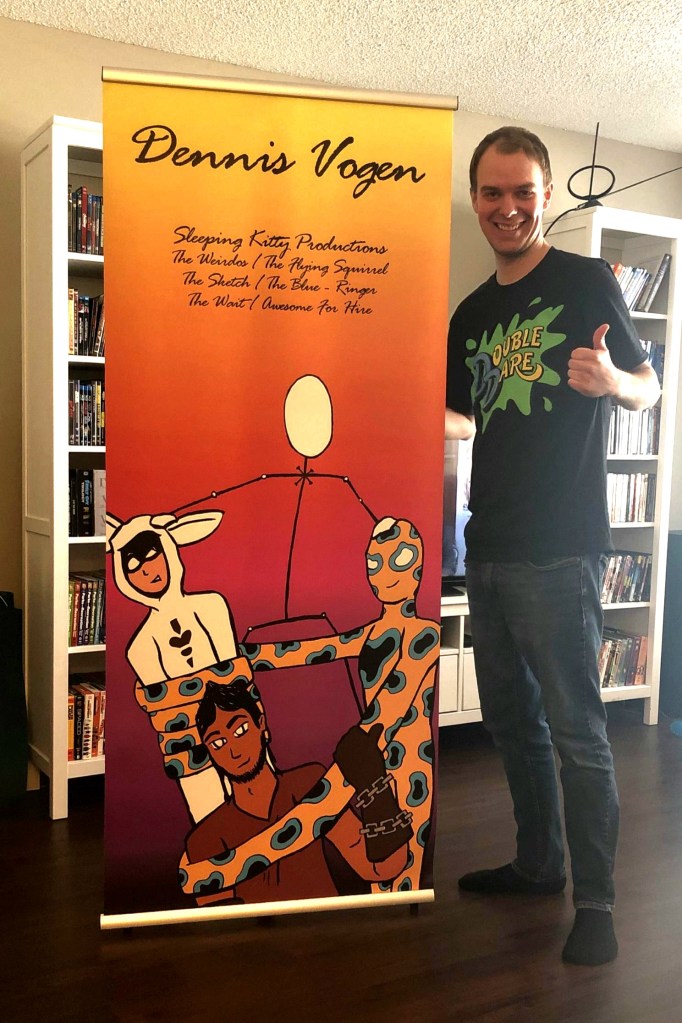
Das is a bartender in The Keller, a bar within the Bar, and works for his uncle, the terrible Green Wolf. We learn that, as a kid, Das put a bully into a coma with his fist; after discovering something odd was happening to his hands, he was outfitted with chained gloves to restrain his power. After Das’ parents died unexpectedly, the key to his chains was lost, and he was forced to live with the Green Wolf, who did horrific things to him as a child and became his employer as an adult.
Das’ rage is easy to write because it resembles my own; always righteous, a fire hungry for justice, fanned by the ignorance I perceive, but struggle to recognize within.
It’s cute, except it’s not.
Like the other character defects I share with my Weirdos (addiction, depression, anxiety, illness, etc, etc, lol), anger isn’t something I’ve conquered; it’s something I deal with every day, to varying degrees of success (and failure).
Sometimes I get so mad I forget how to human.
Sometimes people tell me I’m a very patient human, and it may be one of the biggest compliments I can recieve, because I am not patient by nature, and it often takes an enormous amount of effort to appear that way.
But the parts of me I put effort into turn into integral pieces of my structure; the more I practice things like patience, and kindness, and sobriety, the easier and more natural it becomes.
It’s a micro-evolution, a progression that happens in my own cells; the old ones die, and the new ones, with better information and intentions, take their place. I apply Theseus’ theory to a boat that could barely float before.
The echoes of the past are still hard to ignore.
Das finds people who listen to him, affirm him, and take him in as their own. Their collective voice is louder than the single, lonely one he’s known; they shout of love and honesty and acceptance, and though Das isn’t saved from outside forces, yet, he is finally saved from himself.
 The Den