May 29th, 2024
The only skill I have purposefully developed over the years as a writer is the ability to come up with some happy unhappy answers to life’s big questions.
In previous essays, I’ve attacked philosophy and called it stupid (I stand by it), I’ve expressed my love for philosophy and its colorful cast of thinkers (still do), and I’ve discovered myself to be guilty of committing philosophy (a crime which I will never be able to make amends for in any meaningful way).
But I am not a philosopher. I’m not educated or smart or insightful or incisive enough for that title. It took another recent essay by Brian Klaas to remind me of my true nature.
He wrote a piece about the history of court jesters: the way they spoke truth to power, the tone they used to color uncomfortable conversations, their ability to give happy unhappy answers to life’s big questions.
And then I realized: oh, shit. I am the fool.
A foolosopher.
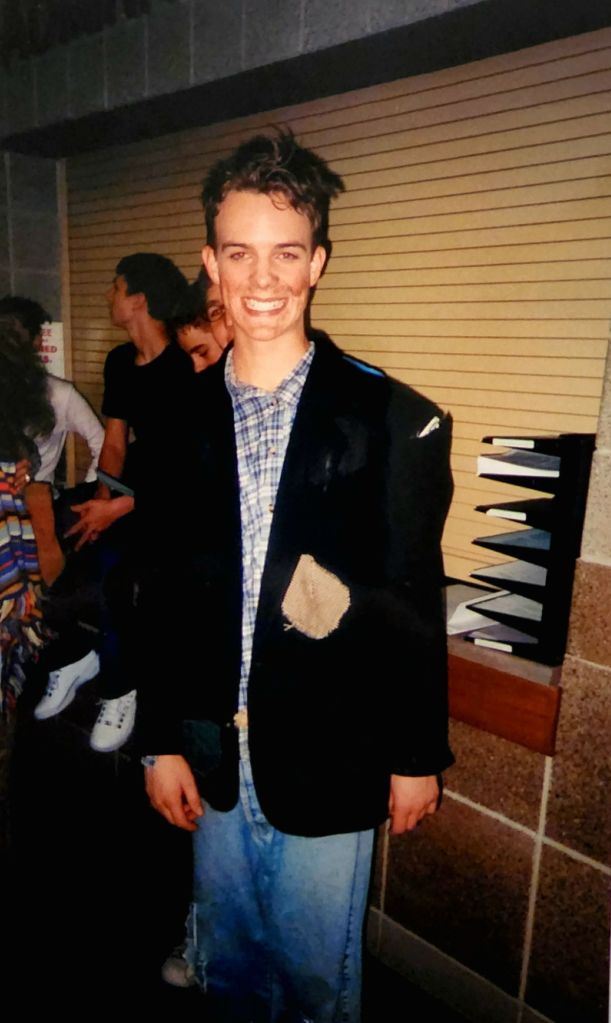
It’s not a revelation nor is it a surprise to me. I have a core energy best described as chaotic, generating an unpredictable vibe. A friend asked me out of the blue last year if The Fool archetype meant anything to me. I played the village idiot in a high school play, obviously typecast. My defining trait is being mischievous.
I remember getting sober and being terrified that I was going to be boring. I knew I wanted to be a better and kinder me, and I didn’t think I could do that without being a bland and watered-down version of who I thought I was.
But who I am is a fool, and a fool is kind with an edge. Just remember to take me seriously at your own risk.
But not just me.
Every fool of one’s own making.
There are those who are born fools, those who are foolish through ignorance, and then those who choose to be a fool, and I fall into that last camp.
Those fools exist to remind all the other fools how foolish they are, while never forgetting that we are all, none excluded, fools in our own unique way.
If you think there are too many unchecked powerful people today, you are correct. History shows us that the best leaders had a jester in their court, someone to hold up a mirror to the silly mistakes all humans make in the course of being human.
Instead of being mad, they laughed and they learned.
Most people in power now don’t have a fool or listen to them; most people in power now would rather have every fool dead.
And the fools, especially, understand the need to both laugh and learn. And how important it is to look stupid in the process.
 The Den