June 14th, 2023
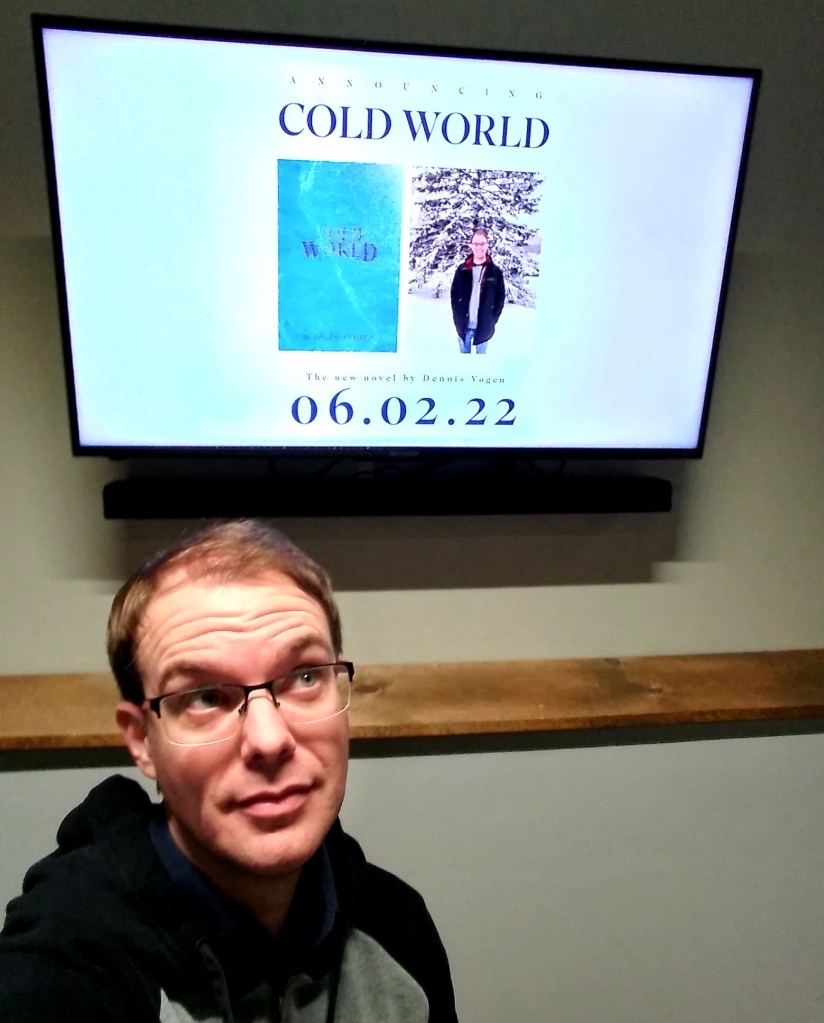
Cold World was the first time I explored the loss of my mom in fiction.
I do it here, on the internet, all the time. Your responses to that type of writing has ranged from “this is exactly how I feel, thank you for writing this” to “this makes me very uncomfortable,” and I am here to report that grief itself colors within that spectrum of feelings, too, and sometimes well beyond those lines.
The first line of Cold World is about death; the last line is about life.
Calef, our protagonist, isn’t religious and isn’t an atheist, either. From years of experience I can tell you that this is a bad place from which to experience loss.
I can’t personally say that my mom went to heaven and I can’t bring myself to say that she just isn’t anything at all, so I spend most days trying to find a place where her and I can exist.
It’s exhausting.
I trudge through the snow anyway.
The worst part of this spiritual in-between is that there aren’t many people who talk about it specifically, so walking here is lonely work, and that’s why I wrote a book about it.
In Cold World, the ever-winter Earth is where I feel like I am, in some kind of perpetual grief season, and Flora is where the religious people are, the place they escape to when our world becomes a difficult place to live.
Sure, it’s metaphor, but when I try to talk to people who have God about my loss, it’s like talking to aliens from another planet sometimes, and there is something lost in translation.
Calef and I believe that true power comes from understanding, and he and I do everything we can to learn the language of faith, to tread on common ground, to find just one thread that connects us to everybody else.
It’s a lost art.
And Cold World is my art made of loss.
 The Den