“Imagine that all of my books are ski hills,” I’ve said to hundreds of curious readers, intrigued by the silver & orange, candy cane cover of A Dream of Tin & Eternity.
“This one is my double black diamond.”
I wanted to write something to celebrate ten years of publishing; a story that used all the major characters I’ve brought to life over the decade.
The multiverse is hot right now, but I knew that wasn’t the way I wanted to bring them all together.
And then I remembered: Liam has vivid dreams.
So started the idea that led to A Dream of Tin & Eternity, my most idiosyncratic and personal of stories, the sequel to everything I have ever published, featuring some things I never did.
“I am not fine. I don’t know how to tell people that, but I’m not. I also don’t see the benefit in being honest about it, because I don’t see a way that it will help me feel fine. If everyone knew how to feel that way, then we just would, wouldn’t we? We would share how to be fine and there would be a book about it, a book that worked for everyone, and we would all just be very fucking fine.”
– Push, Chapter 2
I have found it very difficult to write essays about Push this month. (This is only the second attempt, if you’re keeping score.)
As one of my least read books, I find myself still wanting to keep its secrets, wrapping the twists and turns in thick, opaque paper that a future reader will need to tear open from the corners to experience.
The subject matter isn’t shiny, either. In a world defined by trends like “quiet quitting,” Push explores why someone would quiet quit their life.
The above quote distills a little of that. We hide in the small talk, and when we talk about small things, we diminish ourselves.
“‘And how does not feeling anything make you feel?’ she asks. This question haunts me.”
Which makes me a hypocrite by not talking more about it.
Because talking about big things saves us. Talking about hope and our dreams and what we believe in and tomorrow is what connects us and reaffirms our humanity.
It’s not that I don’t talk about these big things. Some of you are here right now because that’s what I do. It’s just that the story in this book needs all the context it can get, because life is messy and chaotic and just doesn’t make sense sometimes.
“‘I think it’s beautiful,’ she says. ‘I wish you would have told me what you believe in.’
I had never really thought that how I felt about dreams was a belief.
‘And I think,’ she continues, ‘that what we don’t share with each other can be the thing that kills us.'”
Ultimately, that’s what Push is about: what keeps us here when it feels like we’re barely hanging on. It’s a terrible pitch for a book; it’s near impossible for me to sell on any given day.
Season’s greetings! As you all awaken from your collective nap and prepare to lovingly choose holiday gifts for those you care so much about, I hope you’ll give us local creators a look!
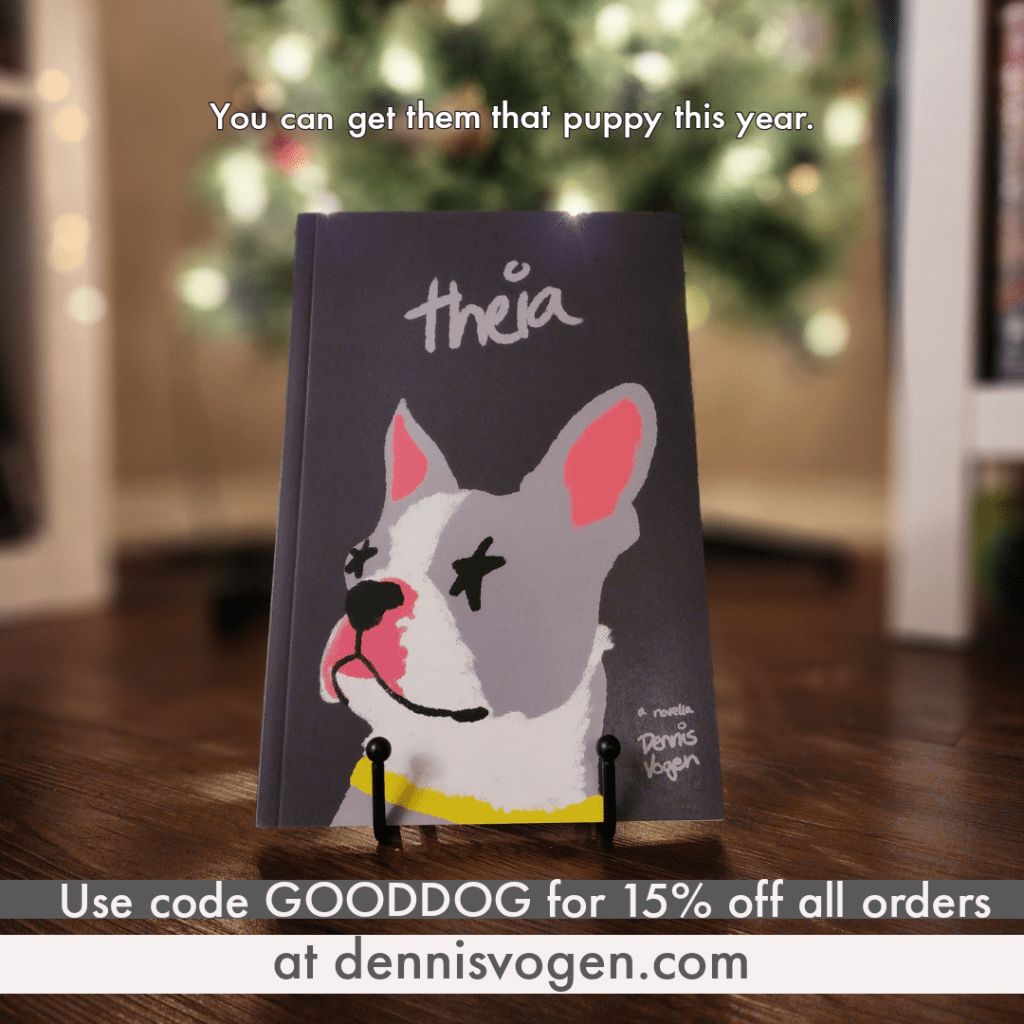
Honestly, I want to make giving my art as gifts so easy that I’m offering you an exclusive discount: using GOODDOG as a code at my official store will get you 15% off your whole order! And to make it even easier, I’ll ship it to you anywhere in the U.S.
I’ve got comics for the forever young and the bit more mature, fiction that both embraces and defies genre, non-fiction that covers four years of my essay-writing life; ten years worth of publishing for you and the readers in your life to explore.
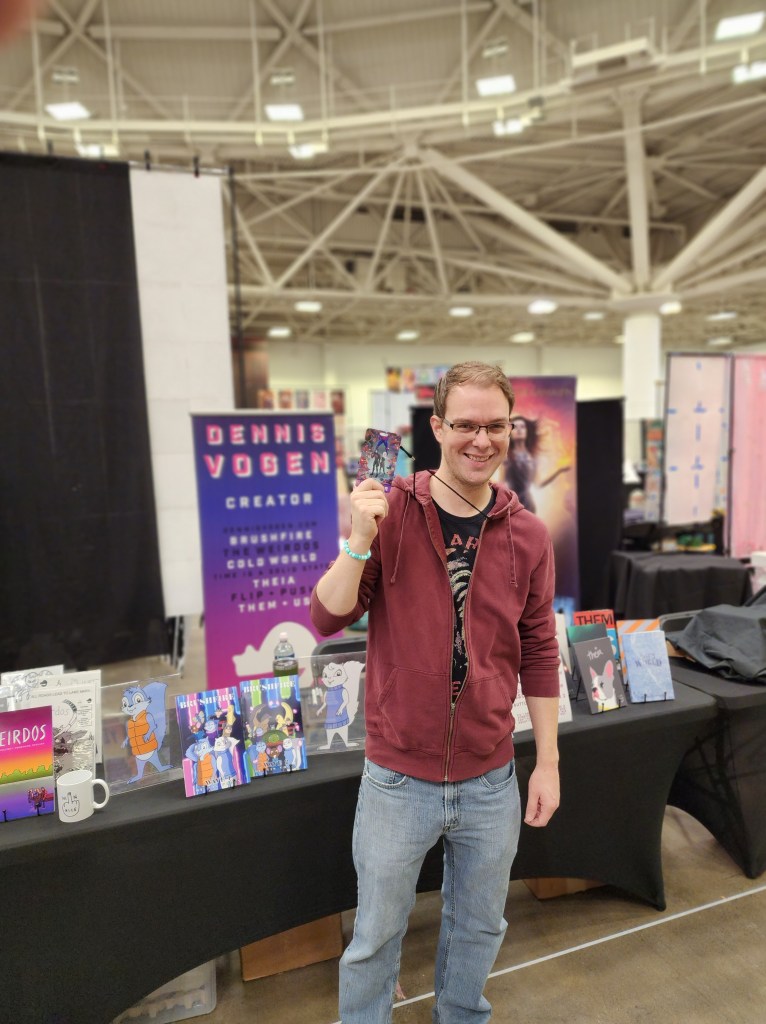
If I had to recommend three books to start for someone who has never read me, I would confidently choose Theia (pictured here), Cold World, and Brushfire: Wave 1.
My store can be found at my official website (it’s in the bio, or just type my name dot com), and if you don’t need the discount, you can find my work on other sites where good books are sold.
I hope you’ll put this code to good use, but I really hope you’re hanging in there and finding balance this holiday season. All my love.
It’s hard to keep loving someone who continually disappoints you and perpetually hurts you, no matter how deeply you love them.
I wasn’t sure when to write this essay, but the holidays are here, and it’s that time of year so many of us are most disappointed and hurt.
Early on in my sobriety, I learned a lot about a concept called detachment, which is exactly what it sounds like: it’s a way of disconnecting from whatever (or whoever) it is that does not serve us.
It sounds cold, but it’s a way of taking responsibility for our own lives, and allowing others to take responsibility for theirs.
Here’s the thing, though: you can detach with love. You can still love someone and decide to set boundaries between you.
You can love someone and not believe what they believe. You can love someone and not support their words or actions. You can love someone from far away and genuinely hope the best for them.
Oddly enough (or not), for me, detaching with love has helped me a lot with people I don’t even know. We all have artists and writers and musicians and politicians and social media personalities we love and, inevitably, these people are going to reveal that they’re human (a twist!) and fallible and, as fans who make these personalities part of our own, we become forced to reckon with it.
For me, it’s loving with detachment. I can love something a person has created and not believe what they believe, not support their words or actions, and genuinely hope the best for them.
And if I can do this for Matty Healy (don’t look him up), I can do this for my family and friends and even acquaintances and strangers that I barely know.
I can love people who are flawed and make bad decisions and need help because loving people is what I feel is the right thing to do. And it doesn’t mean I need those people in my life.
It’s a worthwhile concept: you’re not abandoning the person who needs you. You’re allowing them the same freedom you deserve. And it allows your love to live and be where it needs to be.
When my novella Flip came out, it got nice reviews and people generally liked it. So much so that, less than a year later, in 2014, I announced a sequel called Push.
Wait, 2014? Didn’t Push come out in 2021?
It sure did, people of the future.
The idea I had then was awesome: I was going to write the book in alternating chapters. One chapter would be told by Liam, then the next chapter by Alen, then Liam, then Alen, and so on.
This concept first inspired me, and then plagued me for years.
I still think it’s brilliant. But it took me a long time to realize that my taste and talent were not the same length. So I abandoned the story as it was, but not the feeling that Liam’s story wasn’t over.
In 2017, I found myself in the hospital after having severe withdrawal symptoms following an attempt to get sober on my own. (0/10, do not recommend.) When I was admitted, they asked me a scroll’s worth of questions.
One of them was whether I ever expressed suicidal thoughts.
I answered, very easily, that I had not. And another voice in the room said that simply wasn’t true.
This moment changed me profoundly.
It wasn’t just my apparent expression of suicidal thoughts that shocked and haunted me; it was that I didn’t even know I had been doing it.
And that’s when the real seed of Push started to grow.
What if the thing that Liam believed in, his dreams, turned into something else? What if he found himself only in nightmares and didn’t know why?
This was his story, and I knew I had to tell it, if only to keep both him and I alive.
I had to explore the reasons, extreme and subtle, that keep us here or question whether to leave.
Not the lightest of topics.
But hope — hope in Liam, hope in dreams, hope for myself, hope for life itself — is always worth the exploration of those dark, sometimes inexplicable places.
As an expert in addiction (to be clear, what I mean by this is that I am good at having problems with my own addiction, not that I went to school for it, that shit’s expensive), it’s impossible for me to look at life without the option of using that lens.
And I see it in our climate crisis.
Let’s start with a basic truth that nobody wants to hear: there is no amount of alcohol consumption that is good for you. None. You can go ahead and yell “BUT I SAW AN ARTICLE” and even link to it like a psycho, but the reality is: drinking is bad for you, always has been, I know some of it has grapes in it, still not good.
This goes for our fossil fuel consumption, as well.
There is no amount of burning it that is good for us. Again, none. Anybody who tells you that it’s fine has never read a science book (and understood it) or taken a science class (and listened). The Earth is objectively telling us it is sick, arm draped on the cosmic toilet bowl.
And yet the climate crisis remains, somehow, a “divisive” topic among human beings who live on this planet. Like, there are people who think it’s not that bad, or that it literally does not exist.
I know about denial. I’ve felt like I had a problem with alcohol from the first drink I ever had. But over the years, I was able to rationalize my drinking.
For example, I work in the restaurant industry. It was very easy to look around and say: “This is normal.” Or: “That person is worse than I am. I am doing okay.”
TV commercials, movies, and our culture in general told me that drinking whenever I wanted to was absolutely fine. Holidays? Absolutely. Child’s birthday party? Go for it. Baby shower? Hand me a mimosa. Regular shower? The shampoo holder has a perfect spot for a can of beer.
In the same way, we have been convinced that burning toxic black sludge from deep underground is a good thing, even though everything, including our own guts (admit it), tells us that it’s wrong.
In both cases, it’s our addiction, and people who normalize it for their own gains, that keep us from getting better.
I’m not writing to present you with all of the science; it is readily available and easy to understand once we remove our biases. No, I write to help us to make connections that can move us forward, to break up with whatever it is we love, can’t get enough of, and is killing us.
This kind of stuff won’t be fixed tomorrow. But all it takes to get started is today.
“Are you bored?” a co-worker asked me the other day during a brief moment of inaction.
“Oh, I’m never bored,” I said, as I often say.
I explained that my head is always playing thoughts that excite me: developing stories and evolving characters and creating brand new worlds.
But this is only part of the answer.
In a culture where everybody is trying to find ways to add literal years to their lives, I actively slow down the time I already have.
We wonder why, as we age, time feels like it’s speeding up, and one of the reasons is relatively simple: novelty.
When we’re young, everything is new, encounters totally unpredictable, and that novelty inspires our attention in a way that causes us to slow down, carefully observe, and examine with curiosity.
Time feels more solid because we’re more invested in it. Our childhoods feel like entire lives as a result.
As we get older, many of us find ourselves in routines, which — if we no longer pay that same close attention — feel like living different days that play out the same. That’s why they seem to blur together; it’s like we’re staring out a car window without trying to identify any of the individual trees that pass us by.
When this idea is recognized, some jump to the conclusion that in order to live a fuller life, it has to be all-new, all the time. These people think constant moving and travel is the answer.
But what if I told you that you could discover just as many new things in the town you grew up in than you could in a city you’ve never been to halfway across the world? We think we know it all because most of us haven’t studied it well.
What you discover isn’t totally up to the world around you; the world needs you to interact with it. Like Alain de Bottom (who, like my monk book, inspired this essay) says: we can see our familiar world with new eyes.
You could ask someone you’ve known your whole life questions you’ve never asked them before. (I’m a little notorious for asking people big, weird questions.) You could act like you’re visiting the place you live.
You could take a walk in a neighborhood that is unfamiliar to you. You could take a walk in a familiar neighborhood, but actively take in the sights, sounds, and smells around you, which change daily, but only if you’re paying attention.
You could take in a flower like you’ve never seen a flower before.
This is what artists do, and anybody can live like an artist, regardless of their jobs or skills or money they have (or, like most of us, don’t have).
And this is the secret to slowing down our time, making it more dense, valuable, remembering more of the spare handful life that we’re alotted. Wise people say “be present,” and, sure, that’s what I’m saying, too, but I’m also saying something more.
Be observant. Be curious. Think about and listen to everything and everyone. Create novelty in your own life.
I’m sure you’ve already heard, but Marvel is done, big time.
There’s nothing left. It’s all too woke, the studio is broke, none of the stories make sense anymore and they’re just putting out, like, the worst garbage ever made of all time, like, for reals.
Weirdly, though, I watched the season finale of Loki last night, which has been one of the most thought-provoking, exciting TV series of the decade. Oh, and I just left a screening of The Marvels, which was an effervescent, thrilling team-up packed with laughs, heart, and, sure, a few well-earned tears.
This can’t be true, right?
When I was a kid, I couldn’t have imagined a pop culture world like the one we have. I lived before the internet as we now know it; I lived through a time when they weren’t making new Star Wars films and there weren’t any plans to; I remember watching the first animated TV shows created entirely with CGI (what’s up, Reboot and Beast Wars?); I lived with VCRs and “streaming” was what we did on accident during sleepovers.
It is impossible to overstate the importance of the X-Men and Batman animated series to those of us who grew up with them as they aired. To see something we loved so much onscreen in any capacity was enough to fry our little nerd circuits, week after week.
We live in a Golden Age of geek TV, and we’re too entitled to even notice; to say this entitlement ended at entertainment wouldn’t be an honest thing to say.
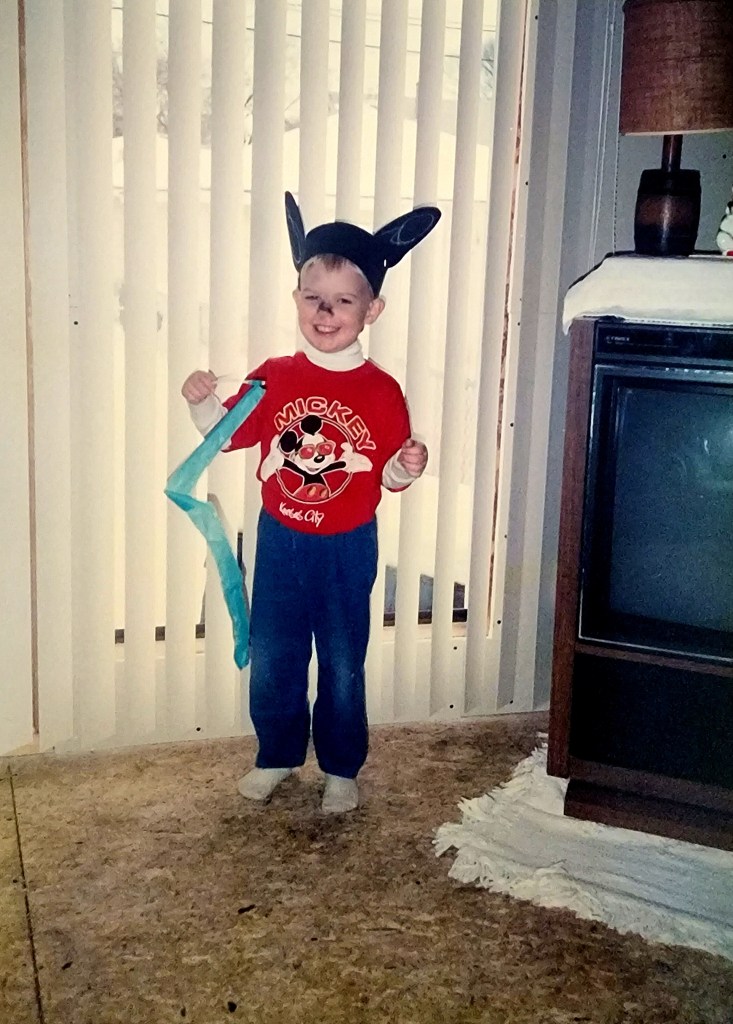
I tell people this all the time: not everything is made for you. And not only is this fine, but it’s beautiful. I have enjoyed every single series and film Marvel and Star Wars have produced; not because they’re all “good,” but because I imagine my eight-year-old self laying down on his childhood carpe, and I can see these stories through his wide, wanting eyes.
And I feel bad for the kids now who are loving these same magical stories, but have to deal with the adults in their world who have to bitch about literally every single thing that rubs their arm hair the wrong way. No gratitude or grace or even the recognition that it means something to somebody else.
Look, I know I’m teased for liking everything, but that isn’t even true; I just tend to look for the good in things, even in things that don’t appear to be made too good. I wasn’t a fan of the new Ant-Man film, but there were pieces I really did like, and I knew, too, that little me would have eaten up every crumb. I did not leave the theater and loudly proclaim, “THAT’S IT THEY’RE DONE THEY’RE FINISHED I KNEW IT THEY SUCK AND ANYBODY WHO LIKES THIS SUCKS DISNEY IS OVER.”
I also do recognize the actual dangers and bad practices; for example, I have followed the SFX artists and their stories closely, and that appears to be a much larger issue than Marvel (it’s most studios) that Marvel just seems to be exacerbating.
But they also seem to be learning; adjusting their output and refocusing on the who, not just the when and where and why.
One of the oddest bits to me is that people have been complaining that the decade-plus MCU has gotten too confusing, too similar to the long-running comics they’re based on. You guys: people are actually mad that the films are TOO much like the source material. You truly can never win.
Except we can: by managing our own expectations. It’s the sharpest tool in my toolbox. Almost any time we’re upset, sad or mad, when we get that uncomfortable feeling in our gut, it’s because we had expectations, and the film we saw did not meet them. Or people did not meet them. Or life did not meet them.
But it’s not a film’s fault, or people’s, or life’s. It’s ours. And sometimes it doesn’t hurt to repeat to ourselves: not everything is for me.
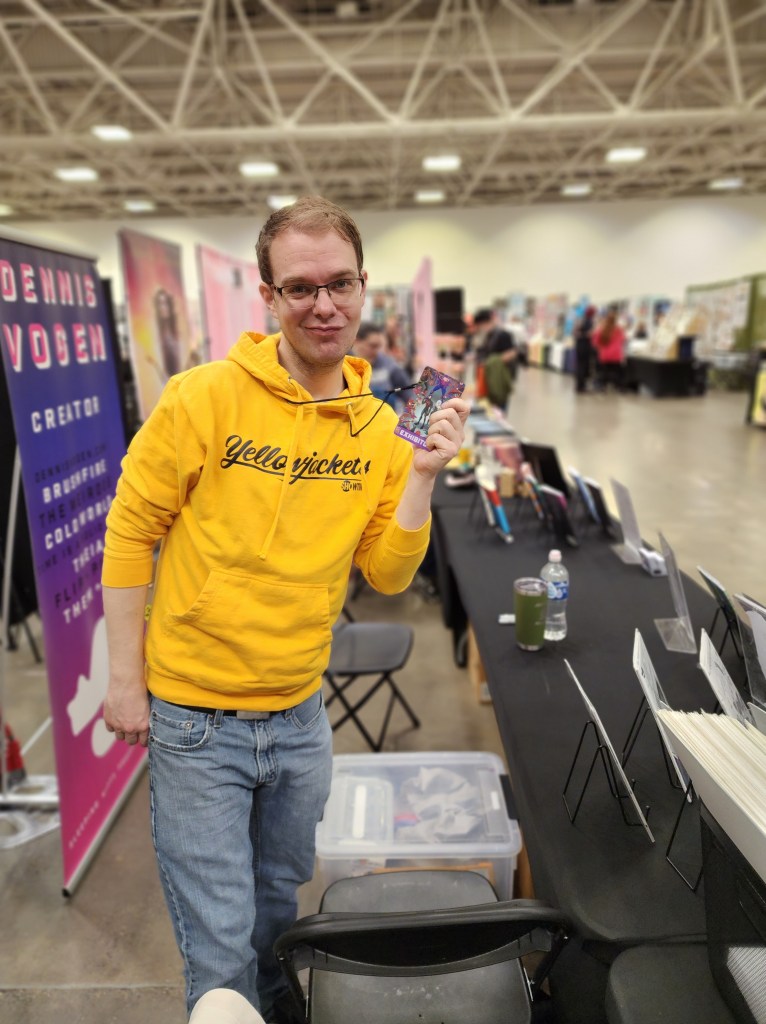
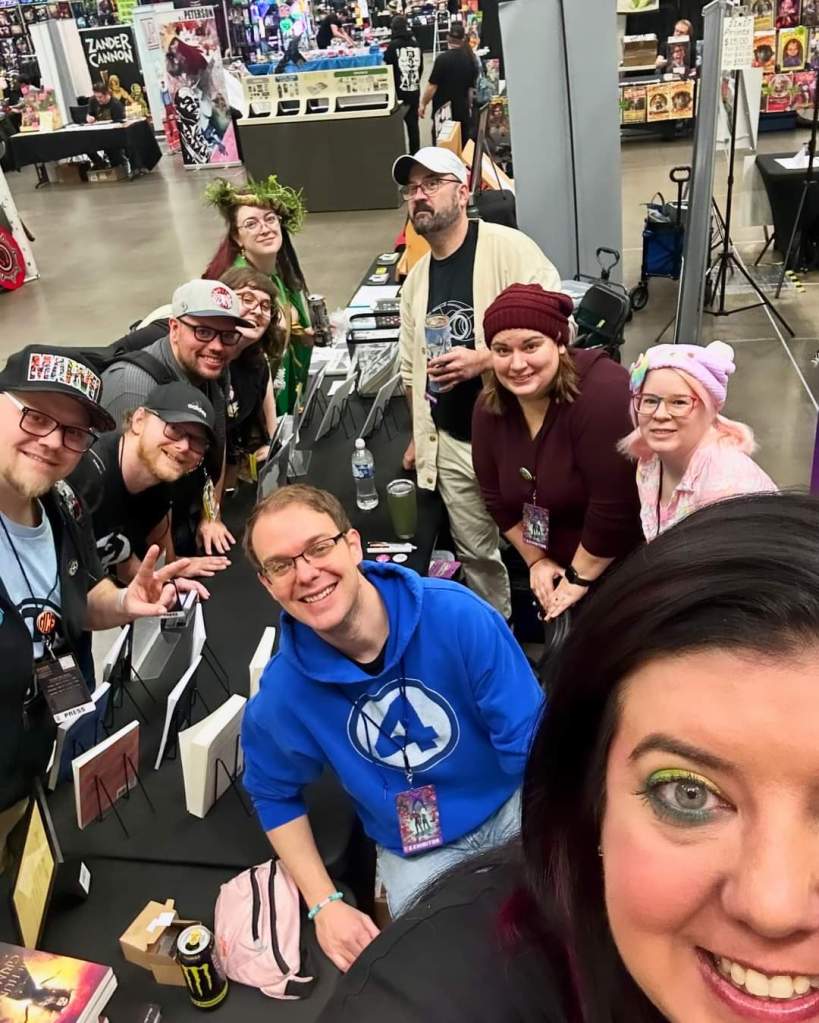
I want to give a massive, heartfelt thank you to everyone to came out to the MCE show, the Theia book club, my writing class, and Twin Cities Con; you have been so supportive and have taught me so much this season.
Conventions are a beautiful, brutal time for artists. Over three days, we spend an accumulated 24 hours sitting behind a table, screaming for attention and desperate for connection, trying to sell the most unsellable thing of all: our art, and ourselves.
I could not be more proud of my artist friends. They’re out here doing it, talented and hard-working as hell, living an actual dream instead of just wishing for it. If you have a writer or artist in your life who was at the con, be sure to wrap your hands around their shoulders and tell them how incredible they are and how proud you are of them; they absolutely deserve the praise.
As do all the organizers and locations of the events; it’s not easy to wrangle a menagerie of personalities and tempers, and every stop on the Fall Tour was a delight.
I have so much gratitude to the longtime supporters of my work who showed up, and also a big hello to all you newcomers!
I have friends who are expert businesspeople — Dani Swanson could sell a dead cat to your grandma — but I was reflecting on how I treat my table more like a pet adoption center.
I try to get to know people and hope that the book chooses them, and that the bond between reader and words is made stronger by that mutual, natural choice. Dozens of you adopted my books this weekend (I was down to the display copies on half my books!) and they all went to such good homes.
Did I say thank you? I think I did. I wasn’t sure whether to wait until later to write this but con-crud comas are real, and I feel one coming on like a side quest.
So thank you. Okay, now I definitely said it. See you next year.
I have a few stories that took a long time to jump from idea to reality, but this book may have waited the longest.
The demand for a sequel to Flip was immediate, and I went so far as to announce and name it back in 2014.
I had a rad idea that proved to be too much for me, too ambitious, and like so many ideas — like so many dreams — it died, unceremoniously, forgotten and alone.
And then the nightmares started.
What followed was a compulsion to bring Liam back, with another story I had to tell, if only for one reason:


 The Den