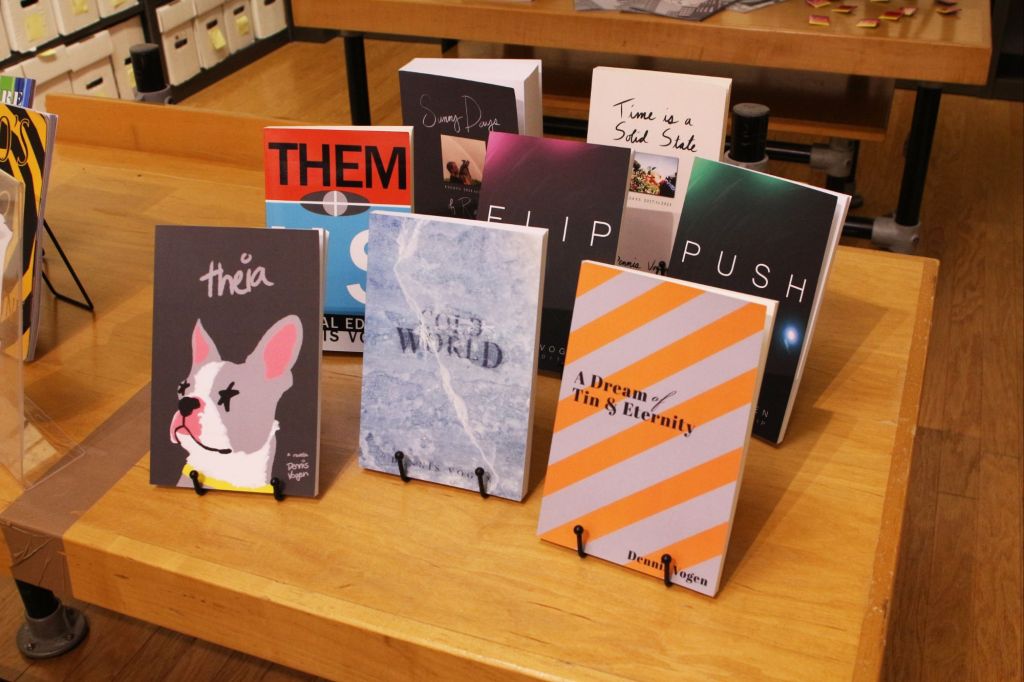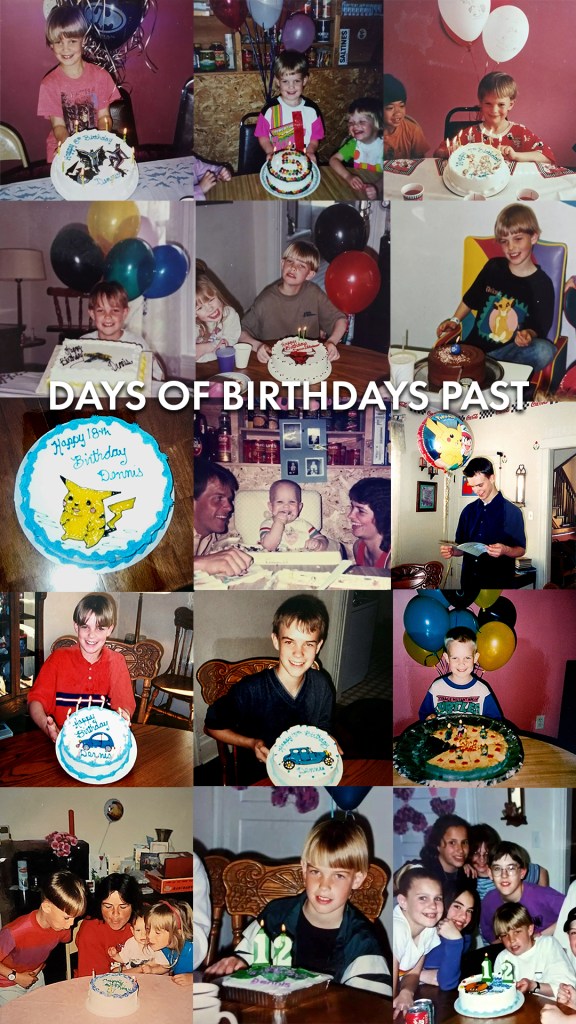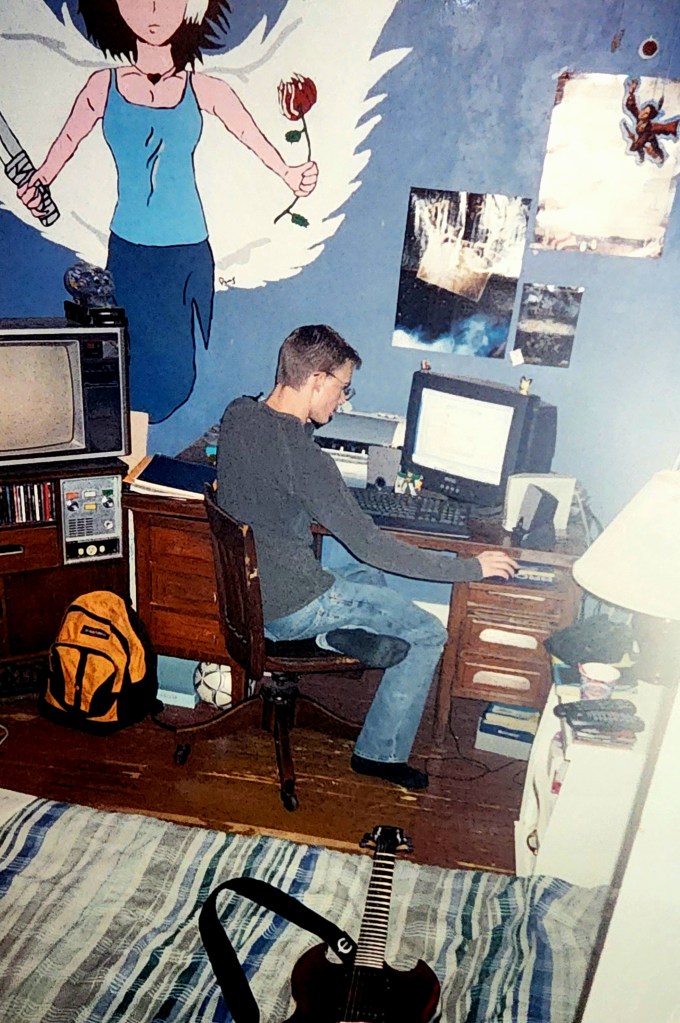
You would think that, after how busy and actually crazy this past year has been, I would crack open a book and an ice cold A & W root beer, lay out on my favorite beach towel in the hot sand, and take it real easy this summer.
That’s probably what I should do.
Instead, I have three big events planned, one each in May, June & July. It’s time to announce my Summer Tour 2025!
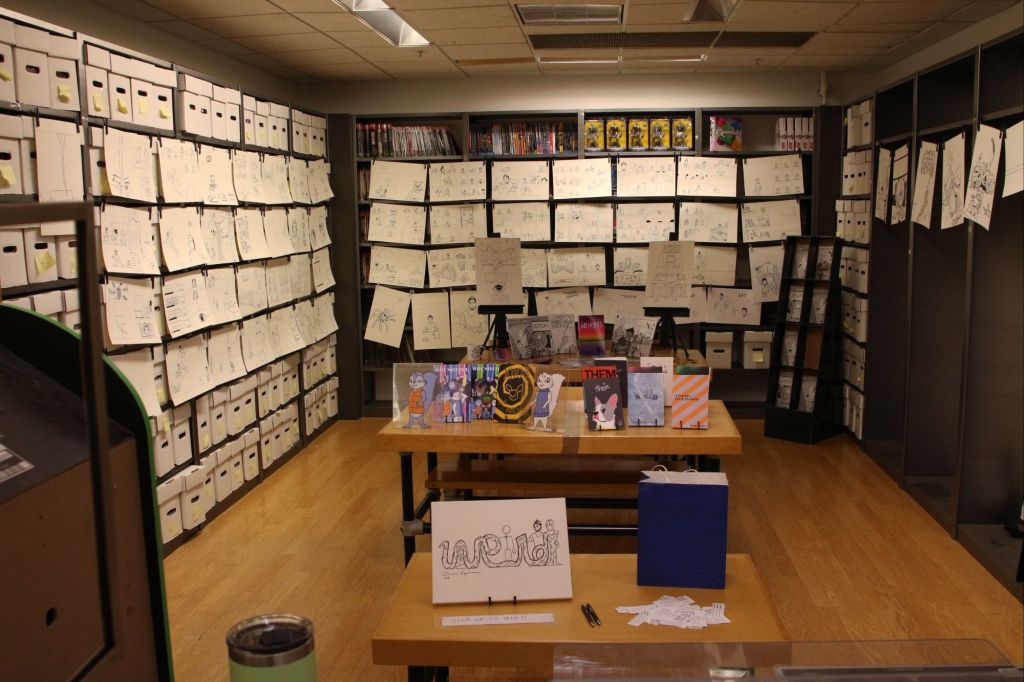
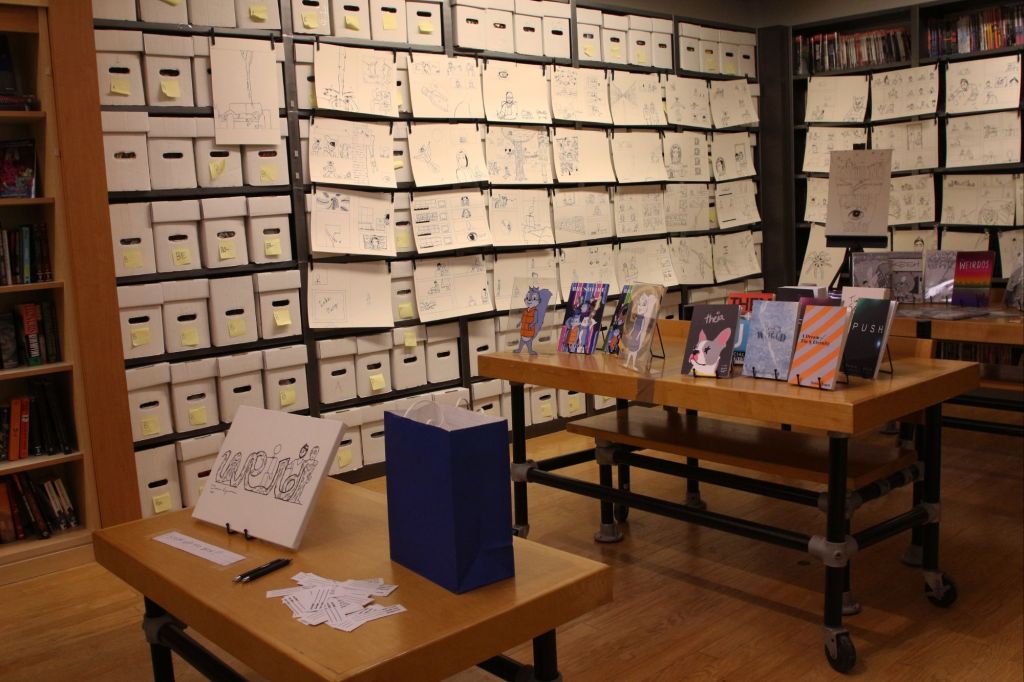
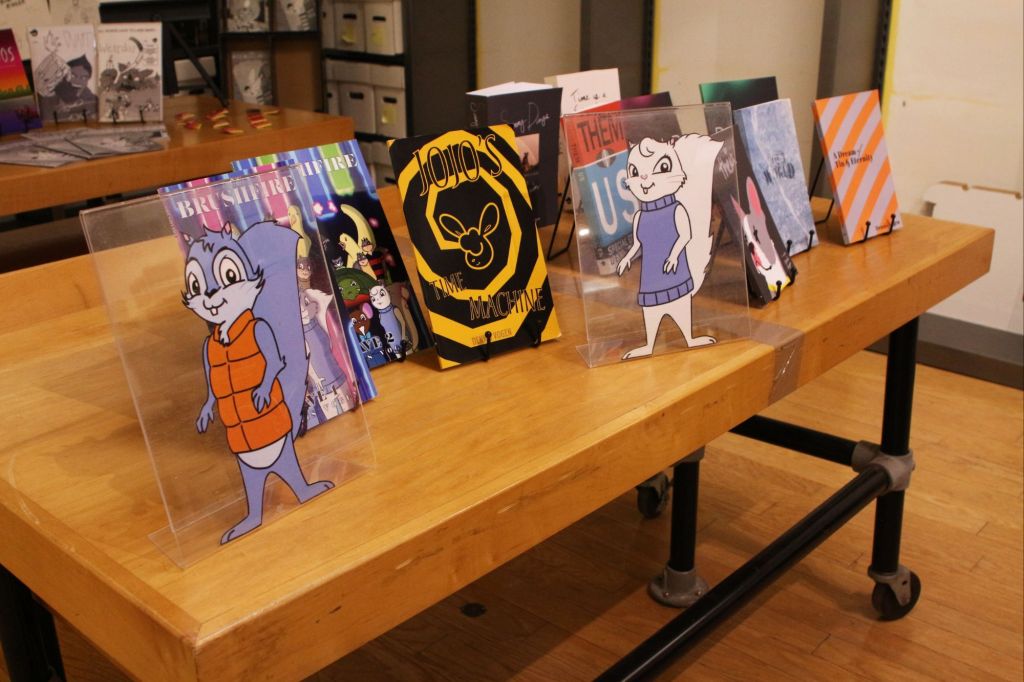
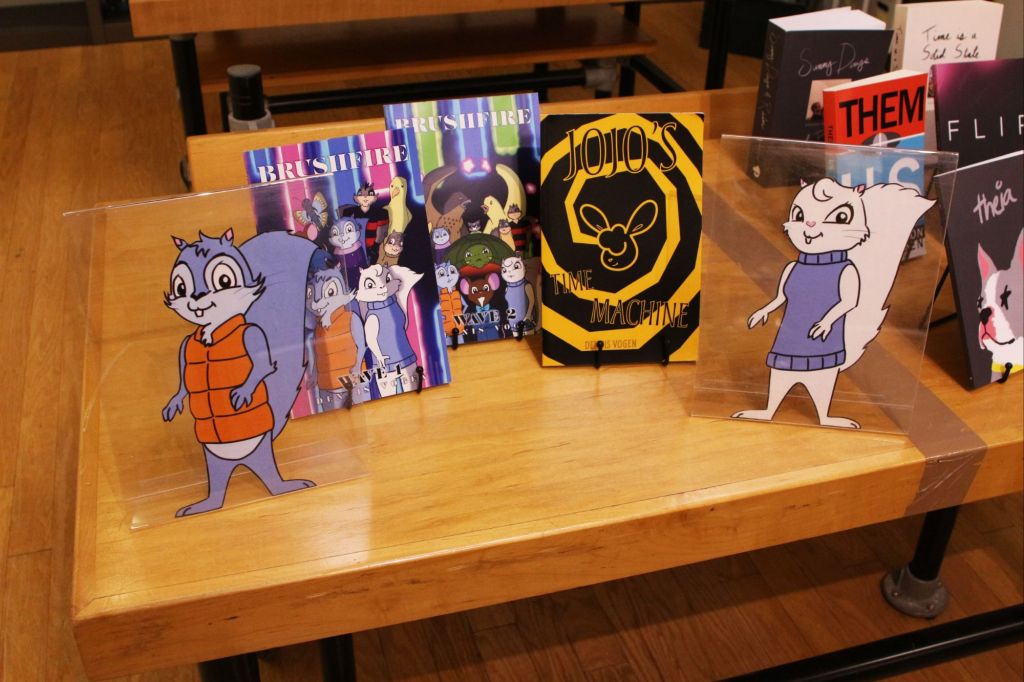
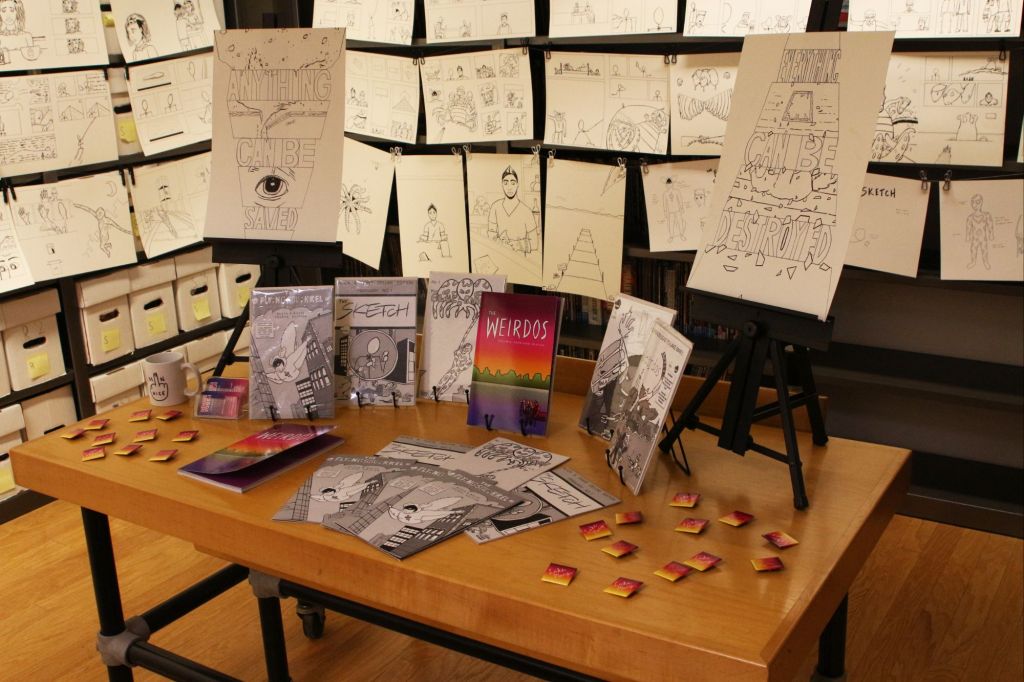
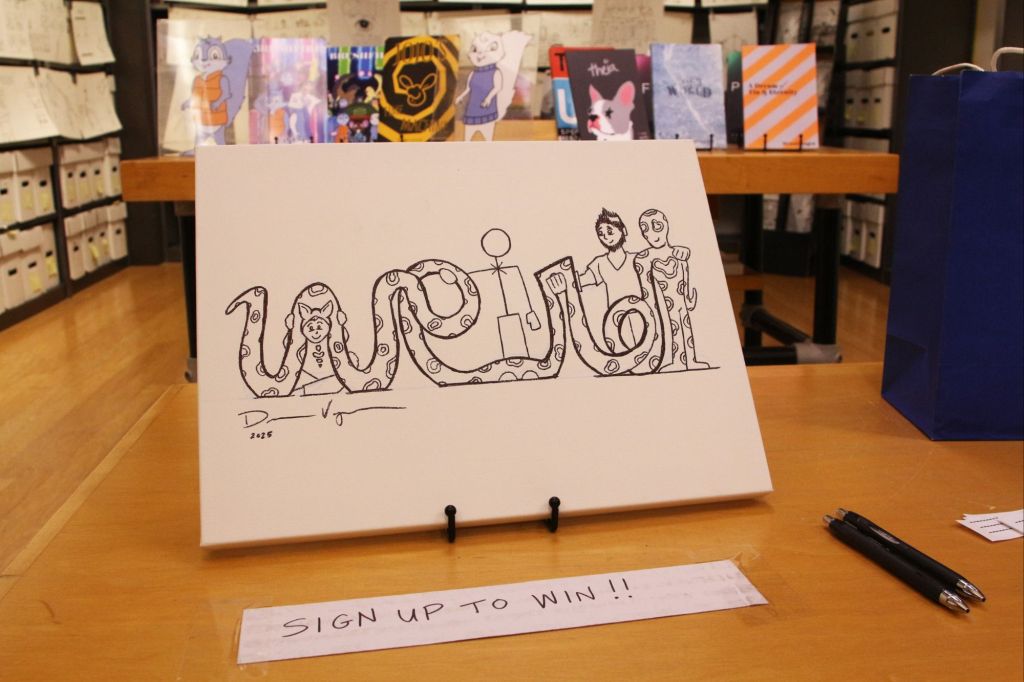
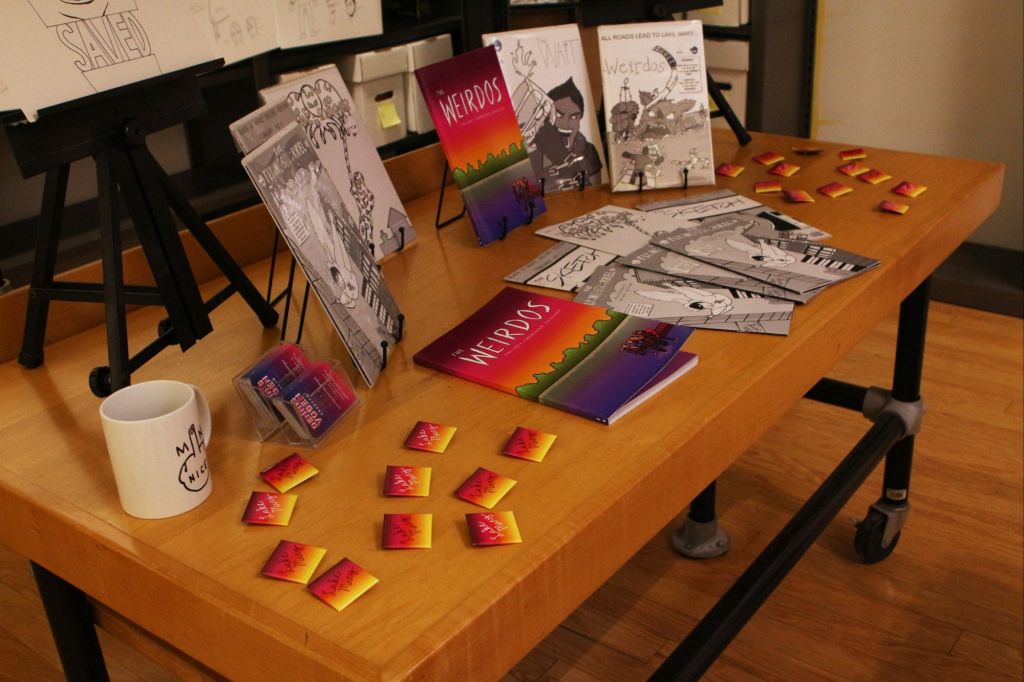
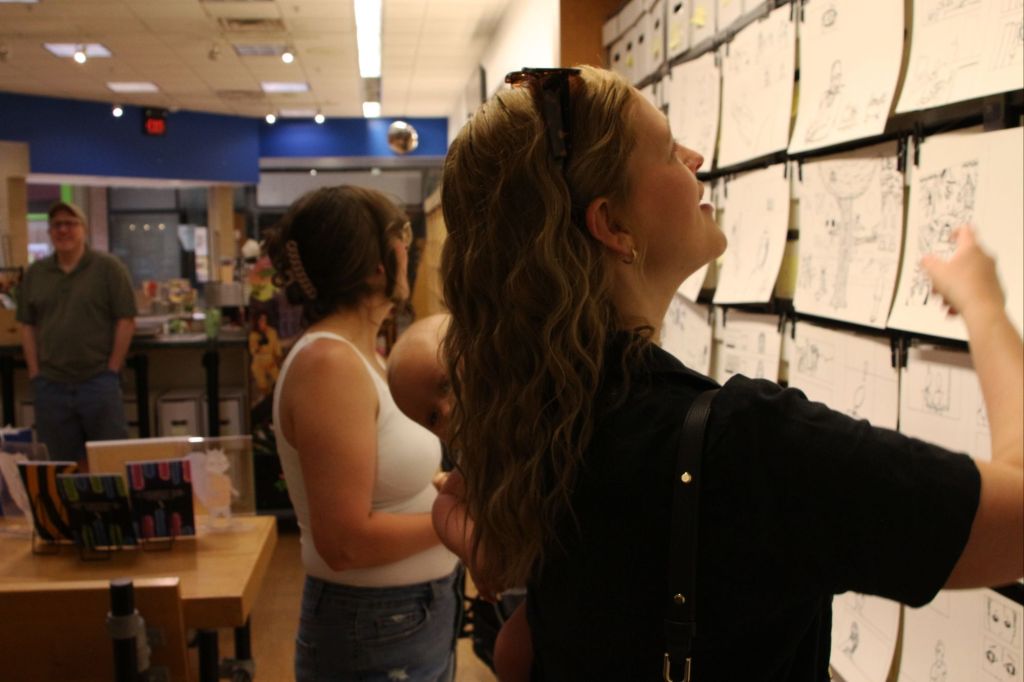
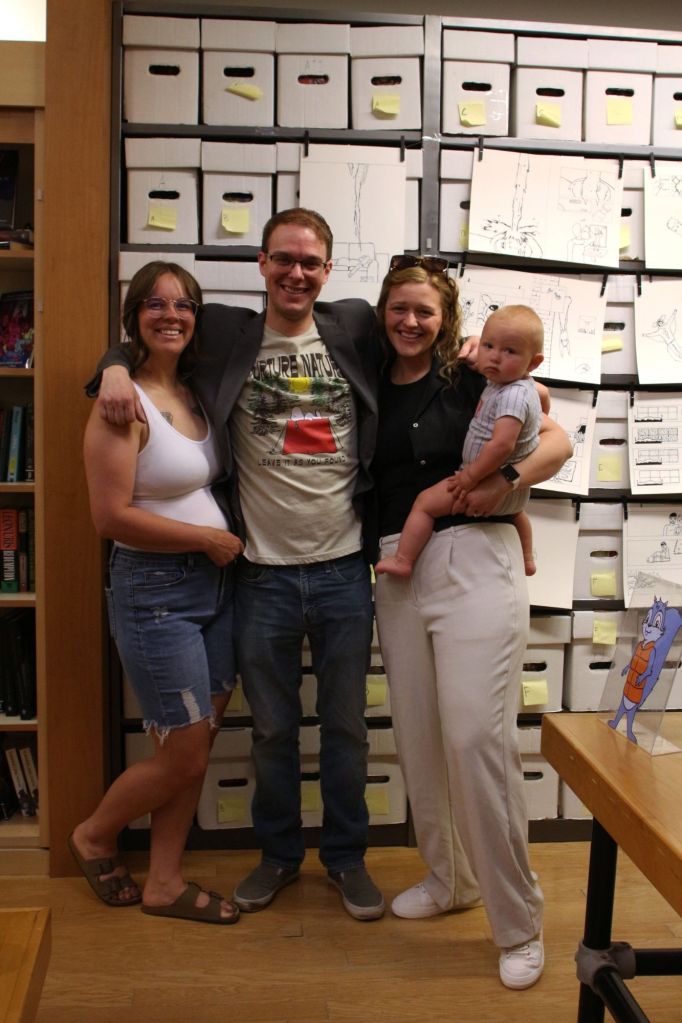
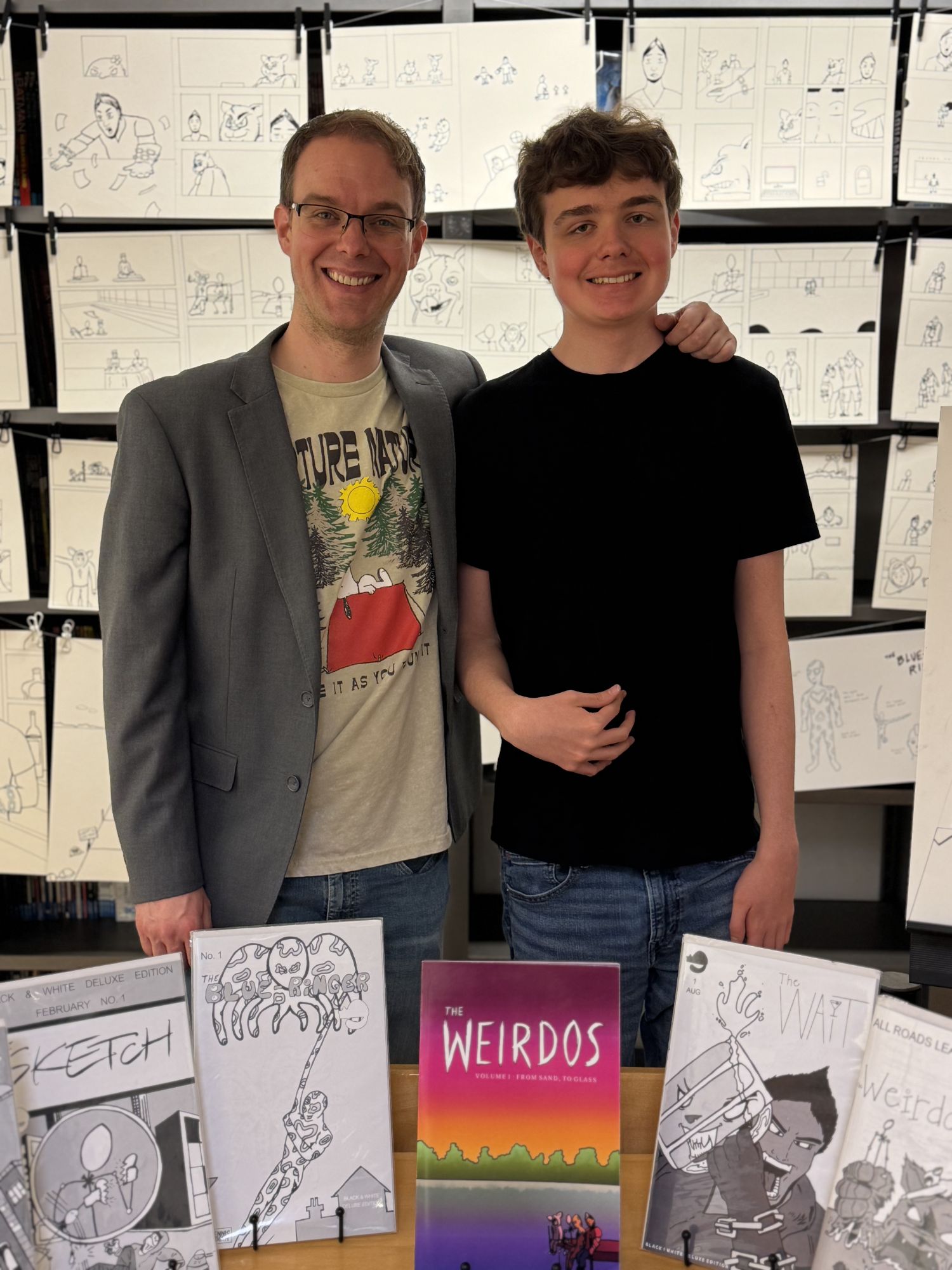
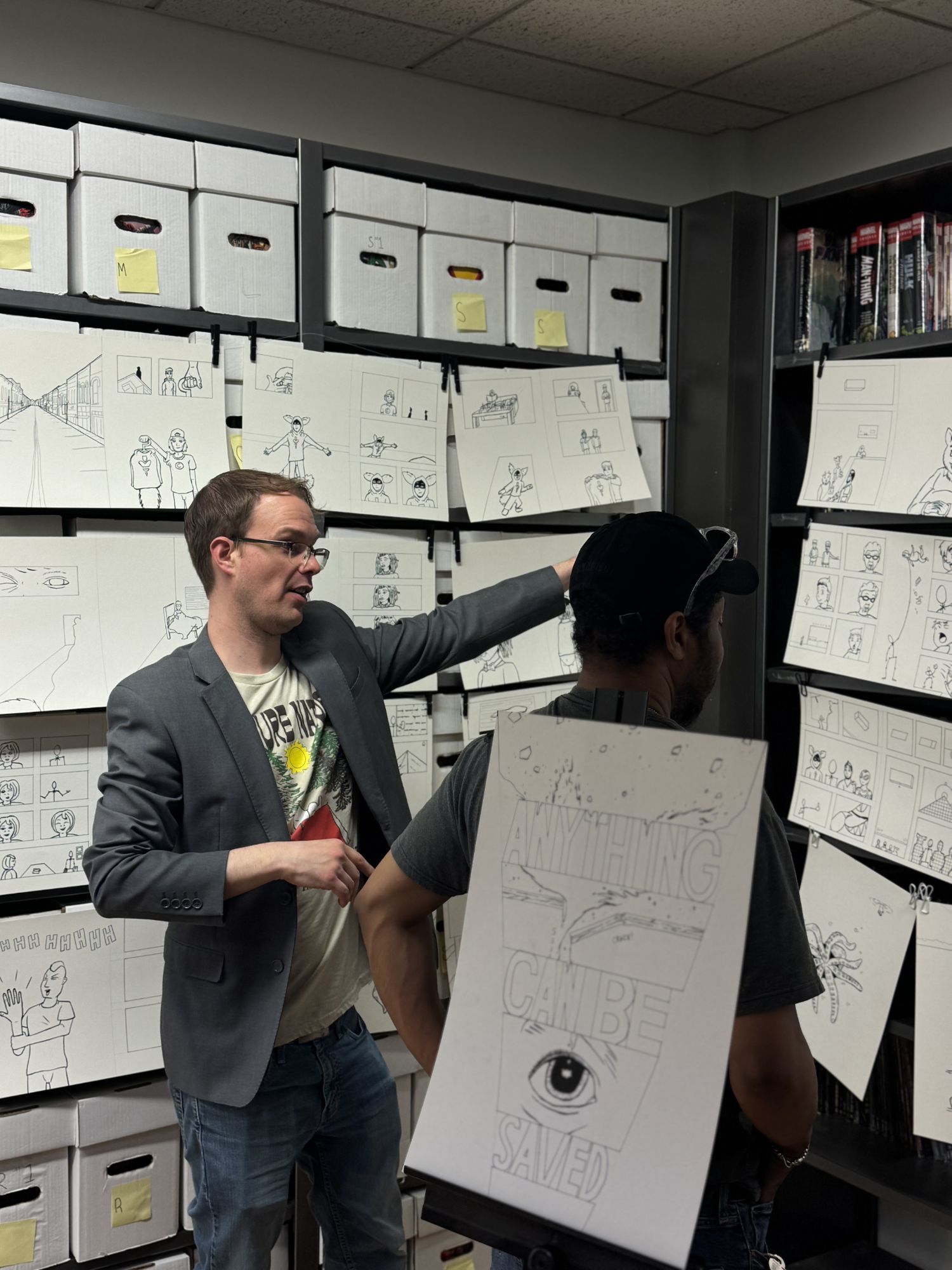
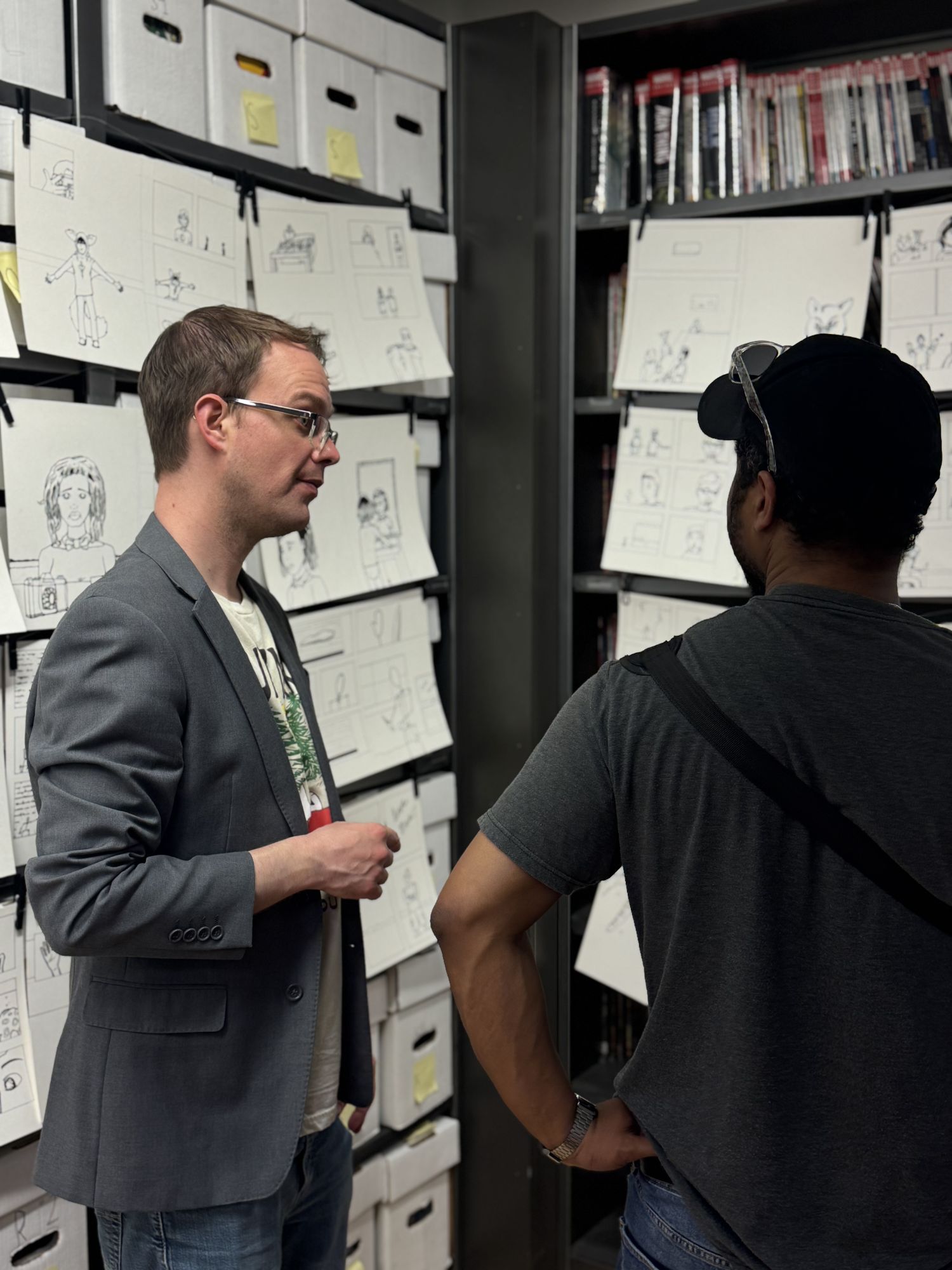
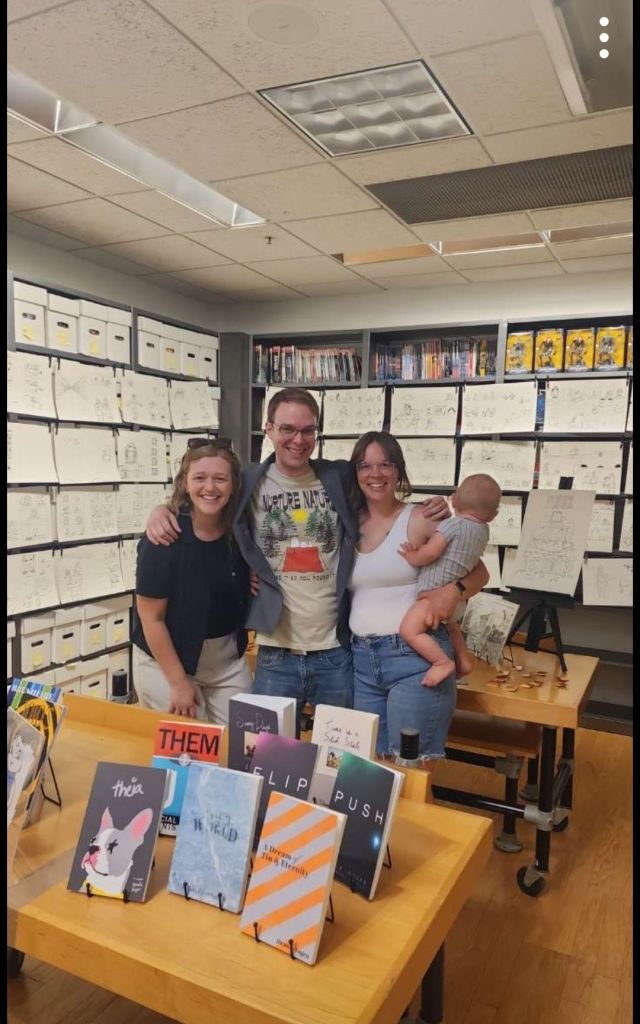
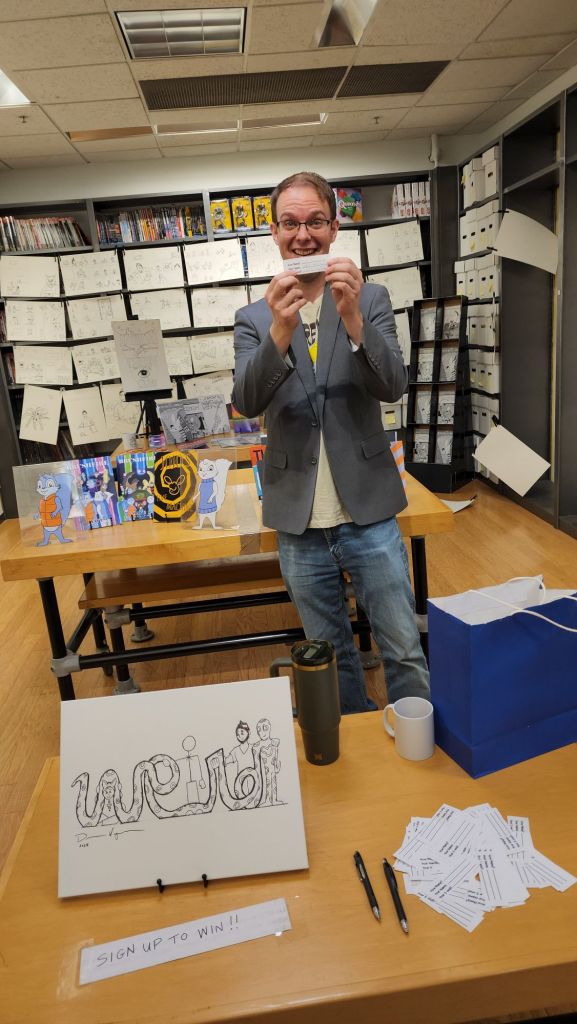
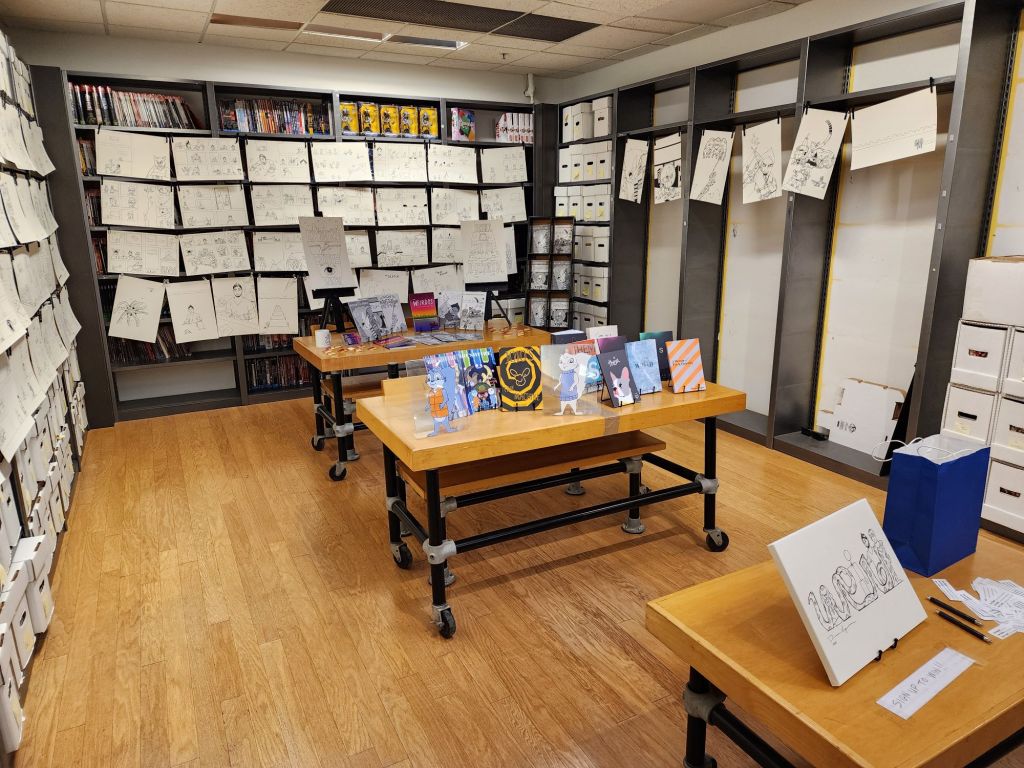
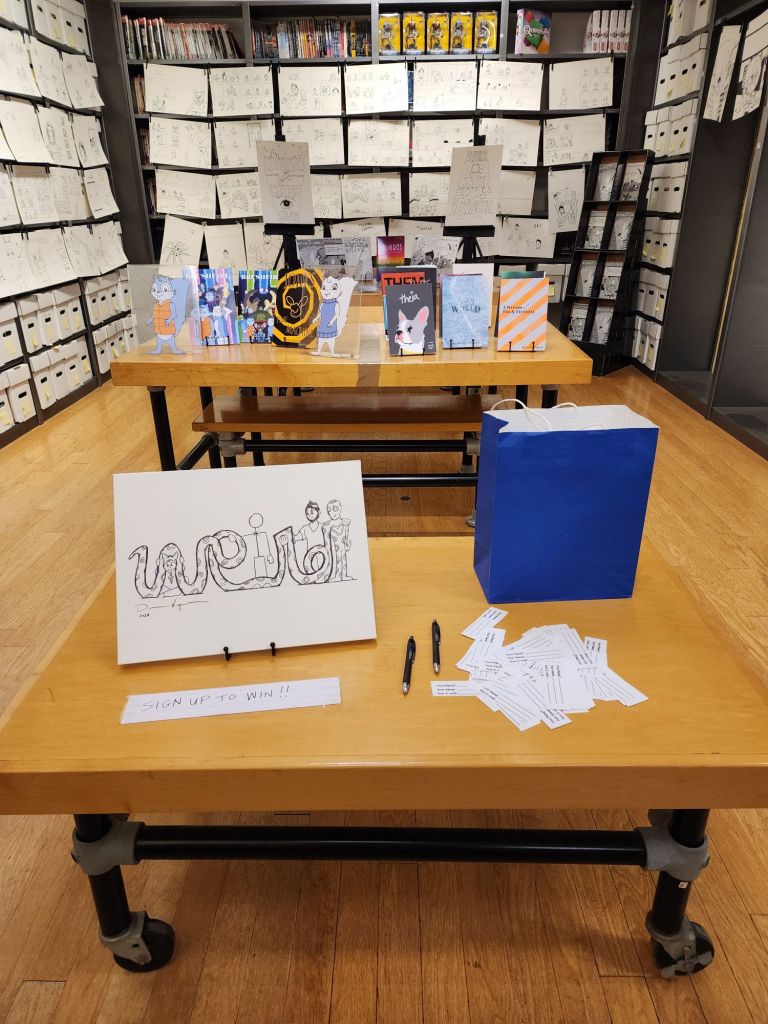
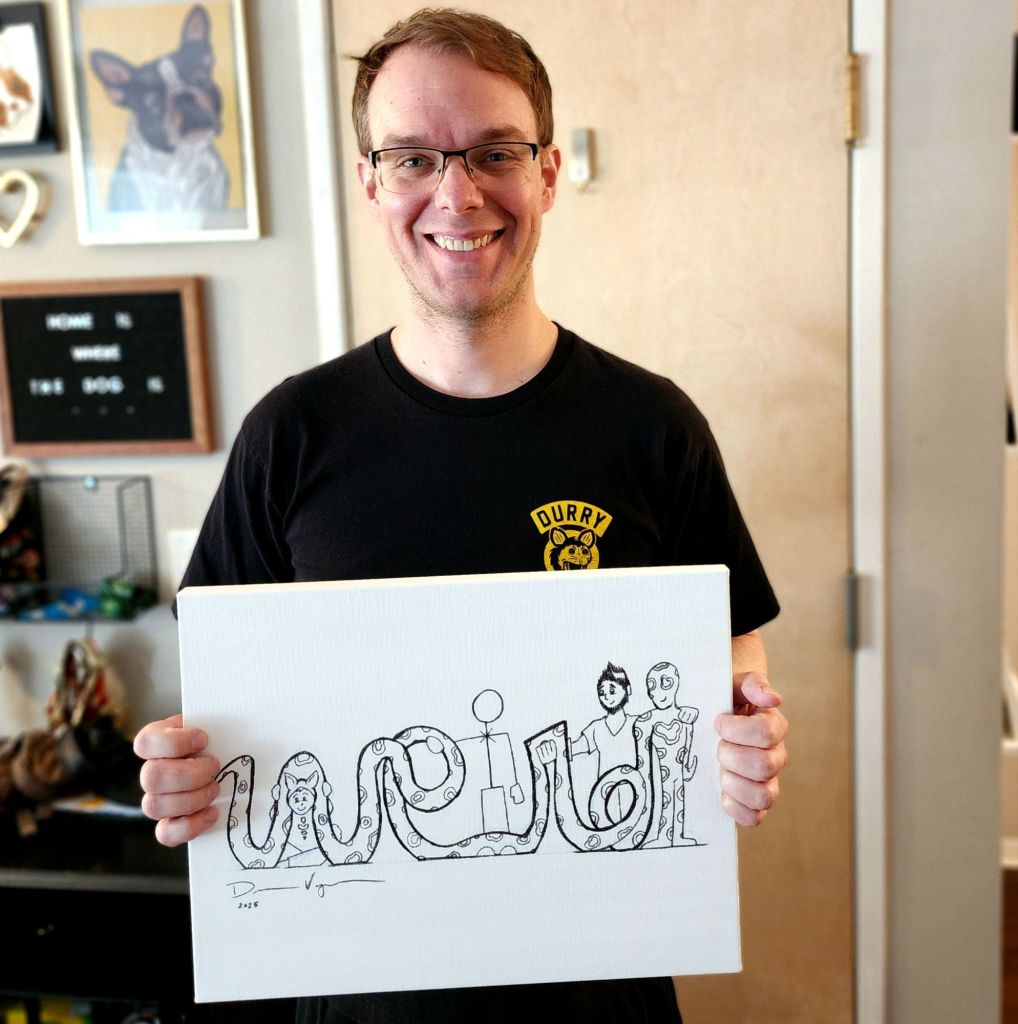
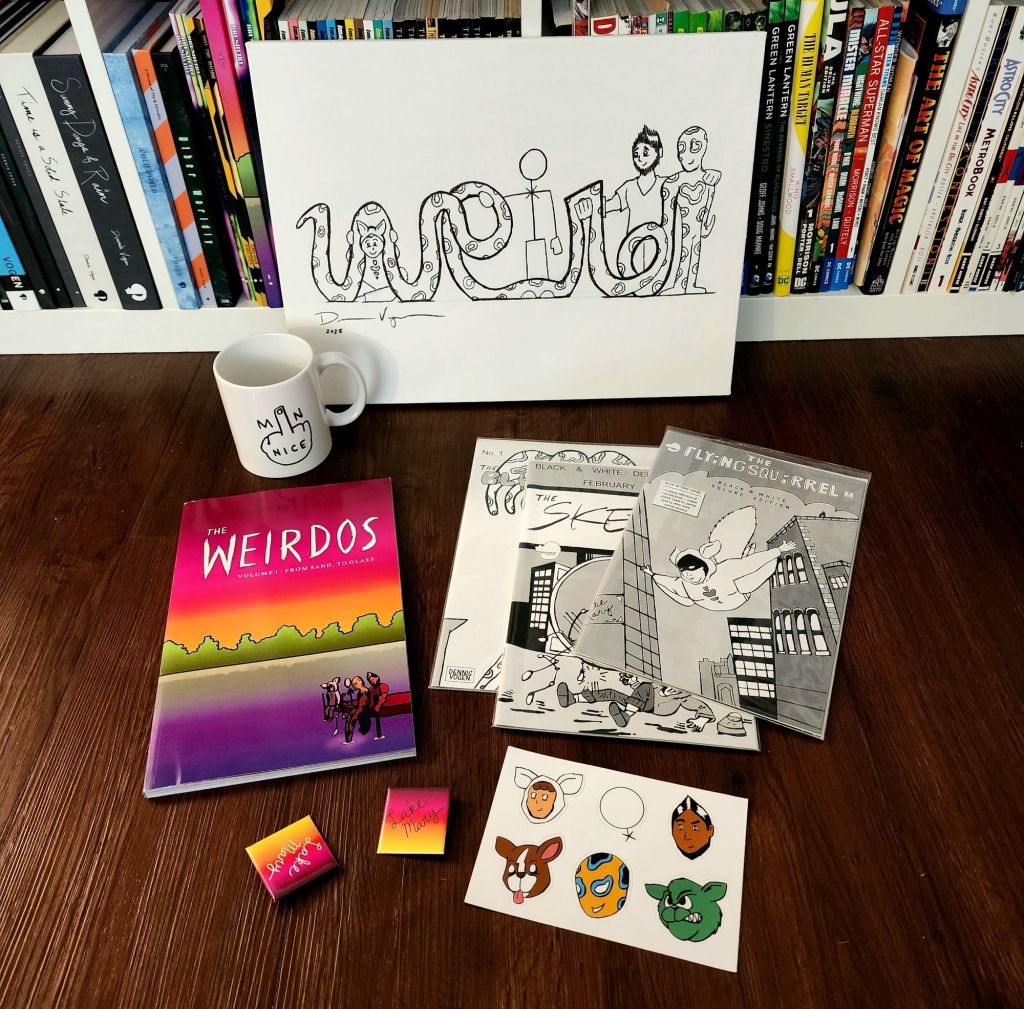
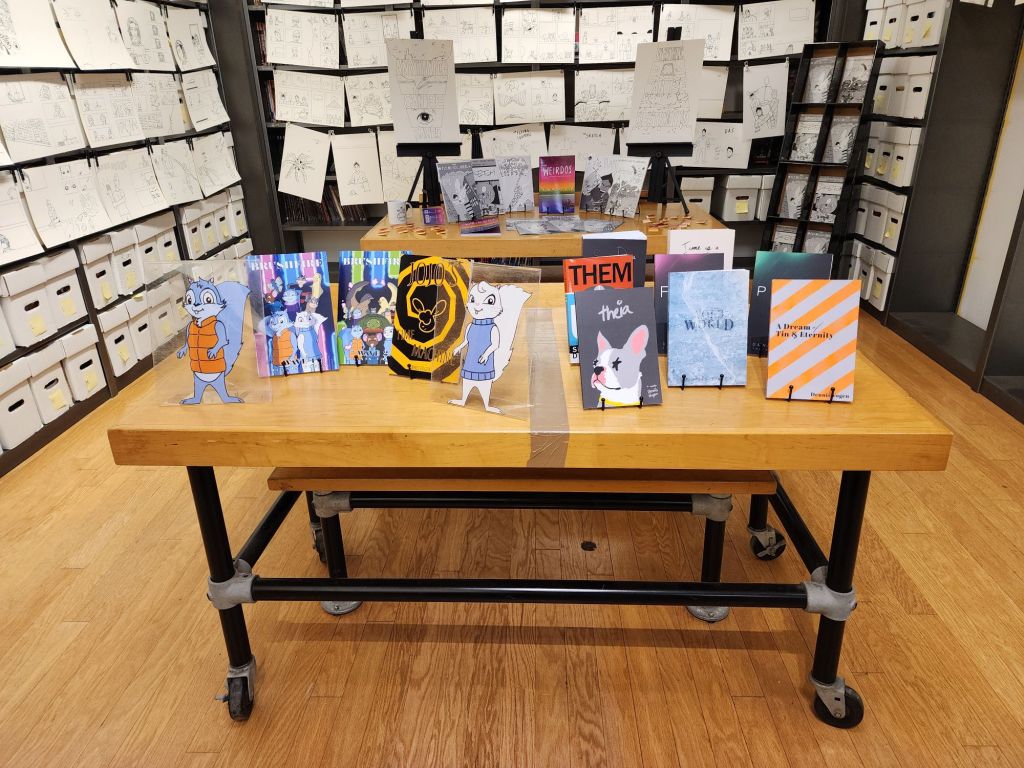
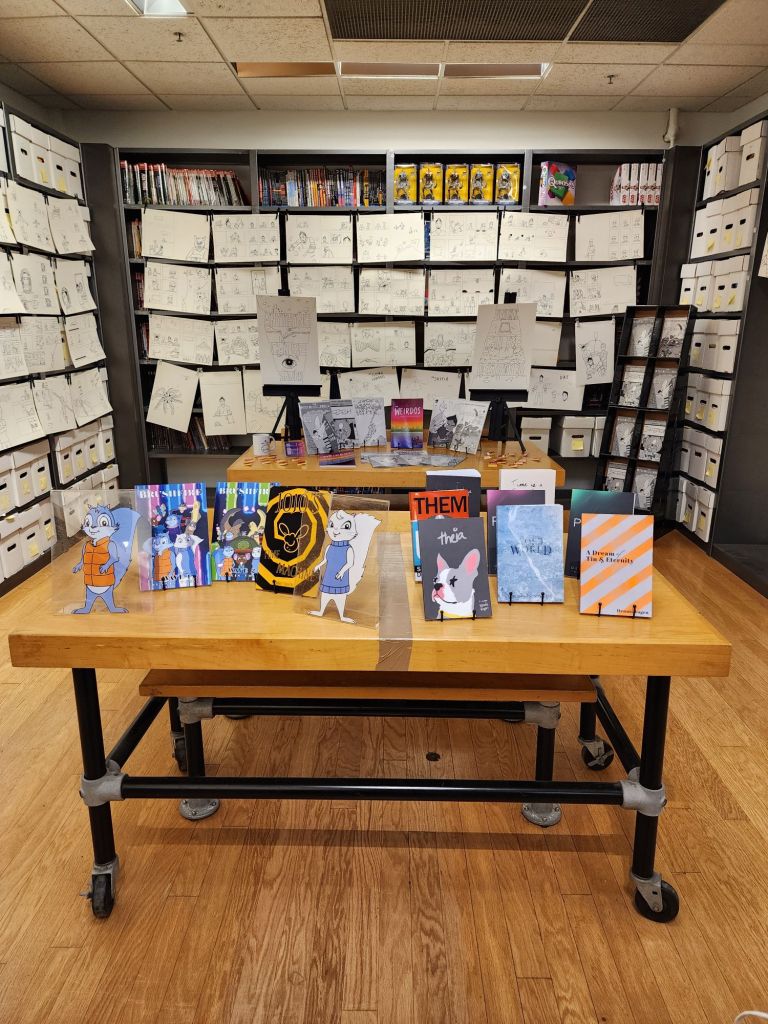
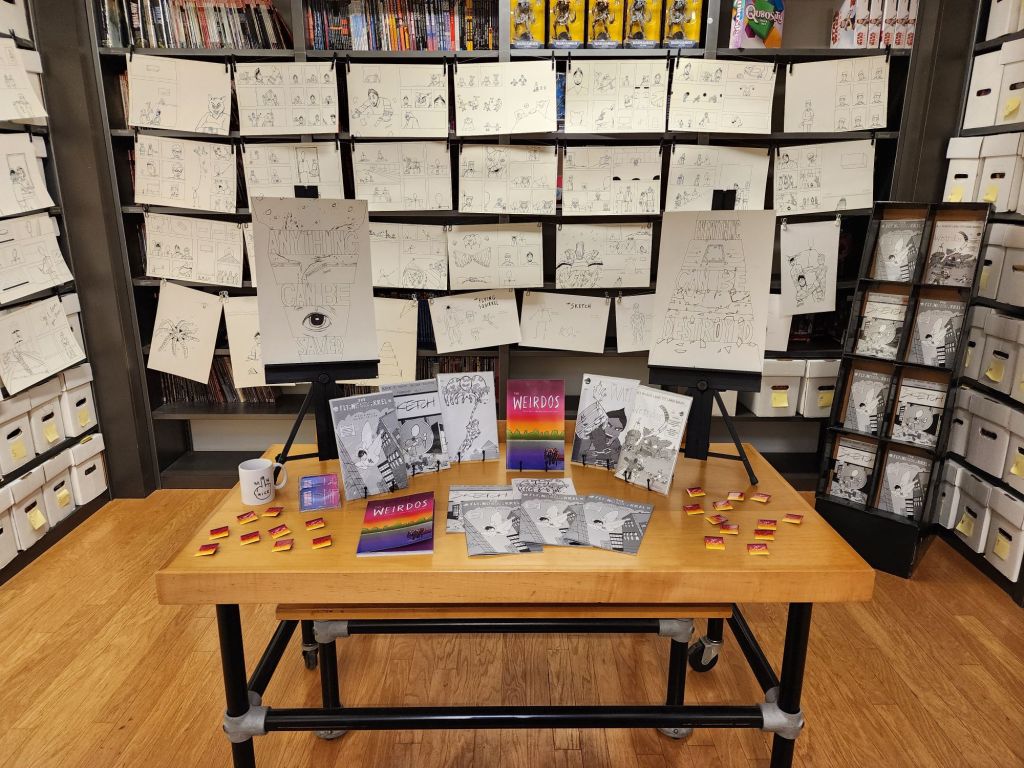
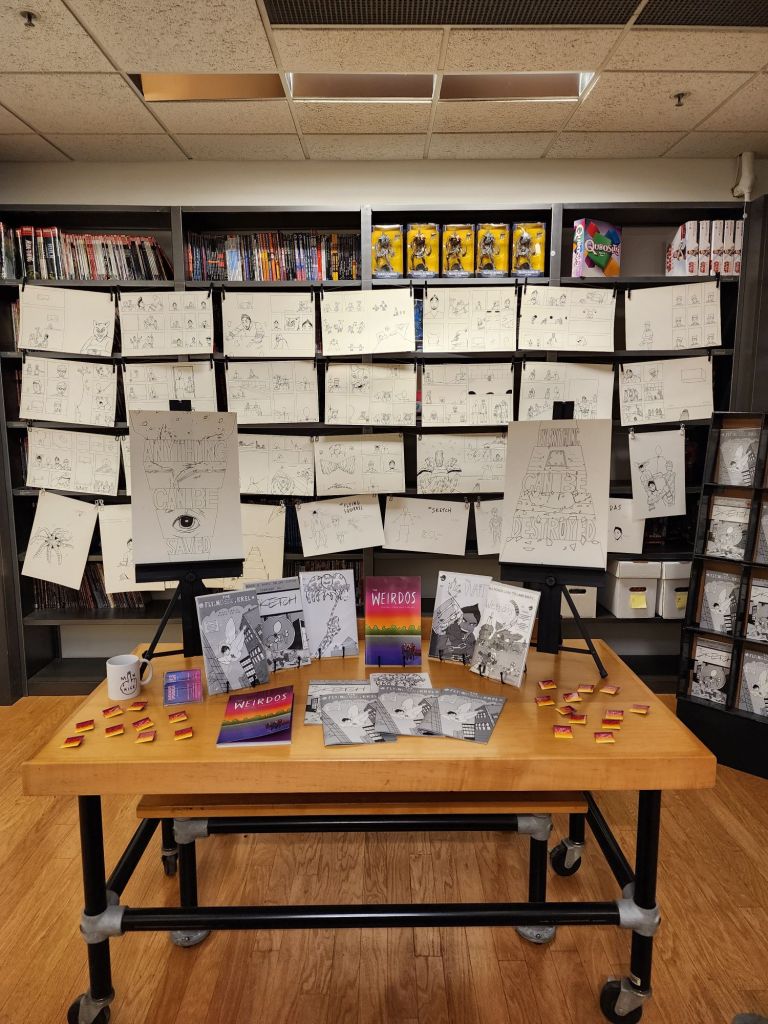
On May 10th, Eric and I are transforming Mind’s Eye Comics at the Burnsville Center into an art gallery for the previously announced Weirdos Art Show. I’m so excited to display my whole heart like this and revisit an era of work that means so much to me. Come have a cup of coffee and enjoy the company and conversation.
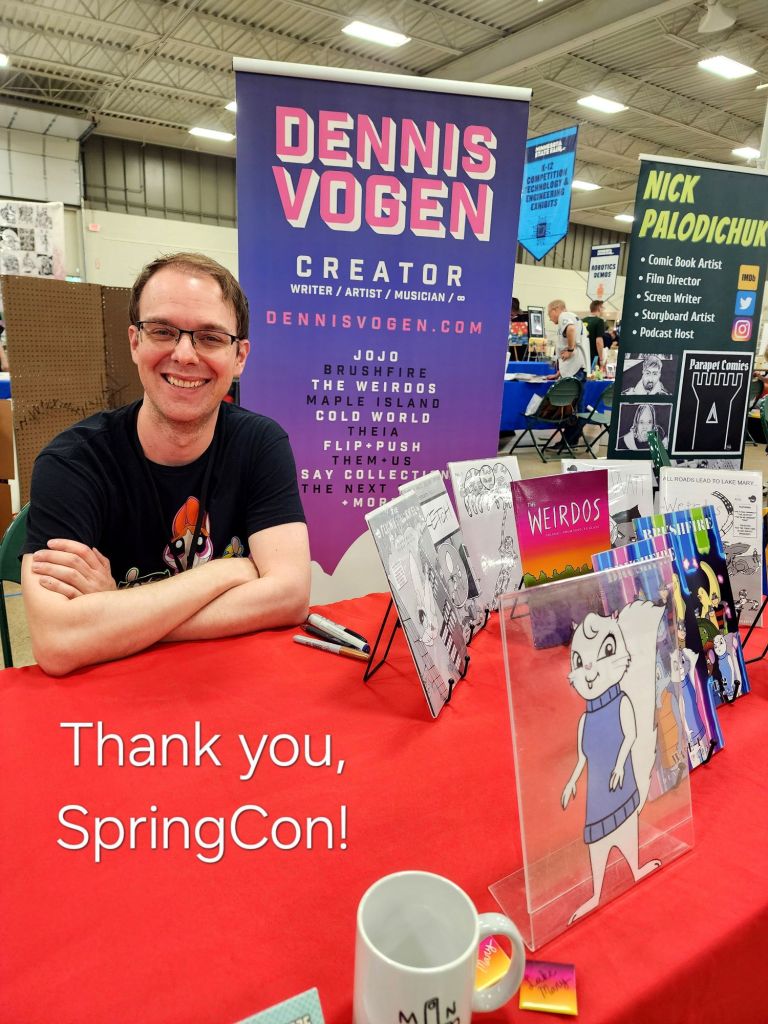
On June 7th, I’m returning to one of the biggest and best local comic conventions we got: SpringCon at the State Fairgrounds.
Then on July 12th (and also at the State Fairgrounds), Inbound is bringing back their surprisingly popular Book Fair For Grown Ups. It should be a delicious treat for book lovers of all kinds.
I can’t wait. I’ll have my books and so much to chat about and maybe I’ll try to make up some surprises, as well. See you soon!
When I went back to school last fall, my past in theater emboldened me to seek out similar groups for my educational stay. When I joined the Creative Arts & Writing Club (and subsequently became its president five minutes later), we started talking events, and a Guthrie visit had been a regular feature of the club in the past.
Our advisor Wes said we could probably even get a private tour.
So I have been counting down the days, hours and minutes to today, our DCTC Guthrie trip. In a very strange way, it kind of felt like coming home.
I didn’t join theater until my sophomore year of high school, but once I did, my life would never be the same. (I also subsequently became drama club president but that was much later.) It was the first time I found a community of people who were genuinely like me, who had similar interests and goals and dreams. An English teacher (who was also the theater director) encouraged me to audition for the children’s play because of *gestures at everything that I am* and I’m still grateful for that. It gave me confidence and friendship and skills and the kinds of highs and lows I’ve only ever experienced on- and backstage. I wrote some of the first things I ever produced for an audience there. I taught classes for the first time. I took naps in the Black Box.
Being backstage at the Guthrie brought me right back to that extremely important time in my life. I was in the Performing Arts Center at Faribault High School a lot more than most people know; I took courses that often had me in the theater, out on that stage all by myself, thinking and dreaming about the kind of person I wanted to grow up to be.
An empty stage anywhere kind of feels the same everywhere.
Anyway, today was a trip in many more ways than one.
After the tour, we saw Agathie Christie’s The Mousetrap (with closed captions!) and it was a blast. It’s the longest-running play in the world, starting in 1952. According to the woman sitting next to me, Agatha had it in her contract that The Mousetrap could never be made into a film; meaning, if you want to see it, you gotta get your butt in a theater seat. The house was packed. After the performance, the cast asked us to keep the secrets of the murder mystery in our hearts, so no 73-year-old spoilers here!
Also, it’s April 5th and I would be remiss to not acknowledge all the badasses out there at the Hands Off rallies. I see family and friends and online acquaintances out being seen and heard and it fills my heart with pride and hope.
This year, I’ve been able to go to a show at 7th Street Entry, see soccer matches at Allianz Field and have a day at the Guthrie. I mention this because they have been a big part in keeping me going when I feel like the world (or this country, at least) is ending. It’s a reminder of the power of art and community and if it’s one you need, too, then here’s your sign.
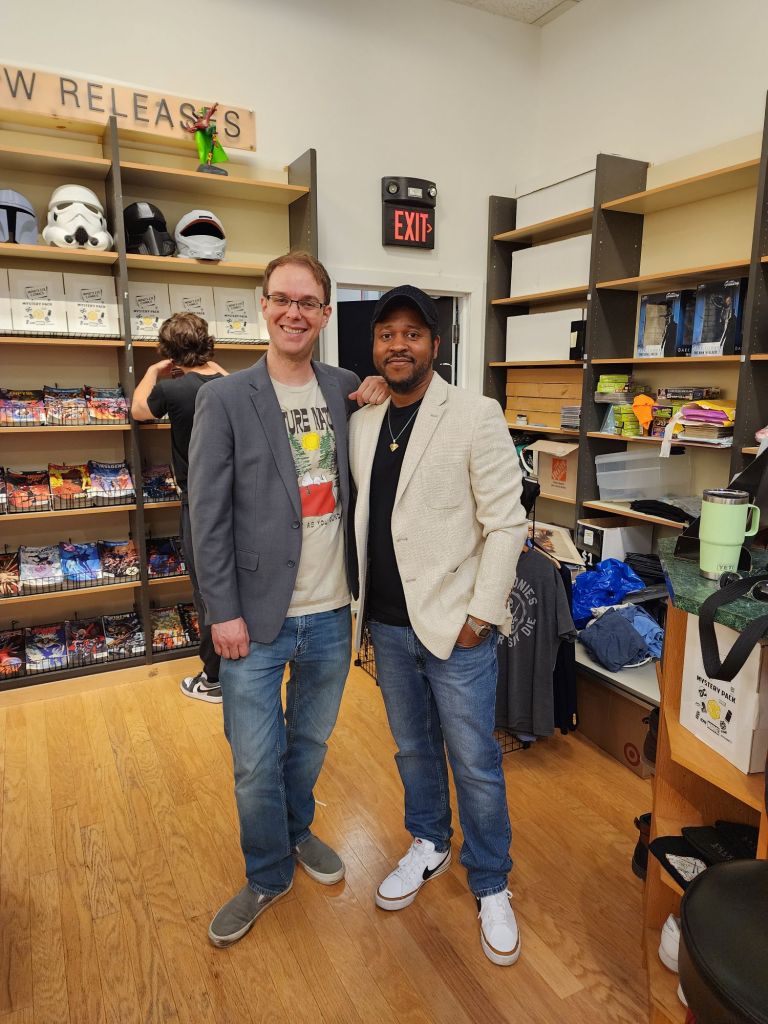
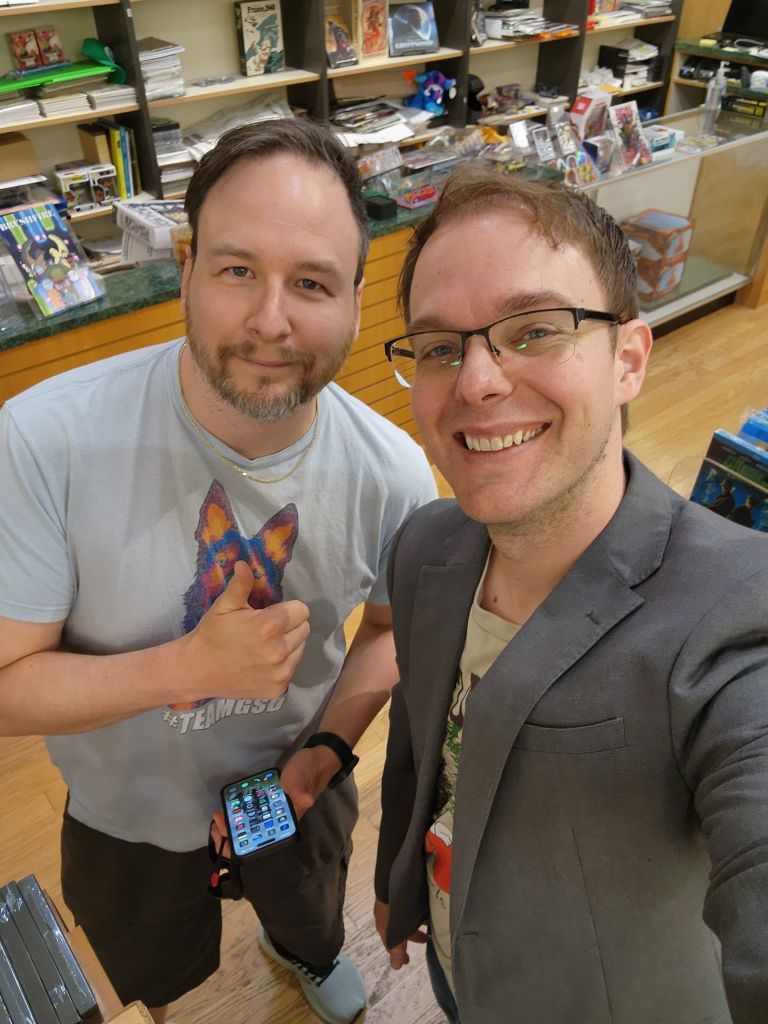
Here are some dumb photos because this is social media and the equivalent of showing you my vacation slides. I hope you’re hanging in there, and finding the sparks that don’t fail to light you up.
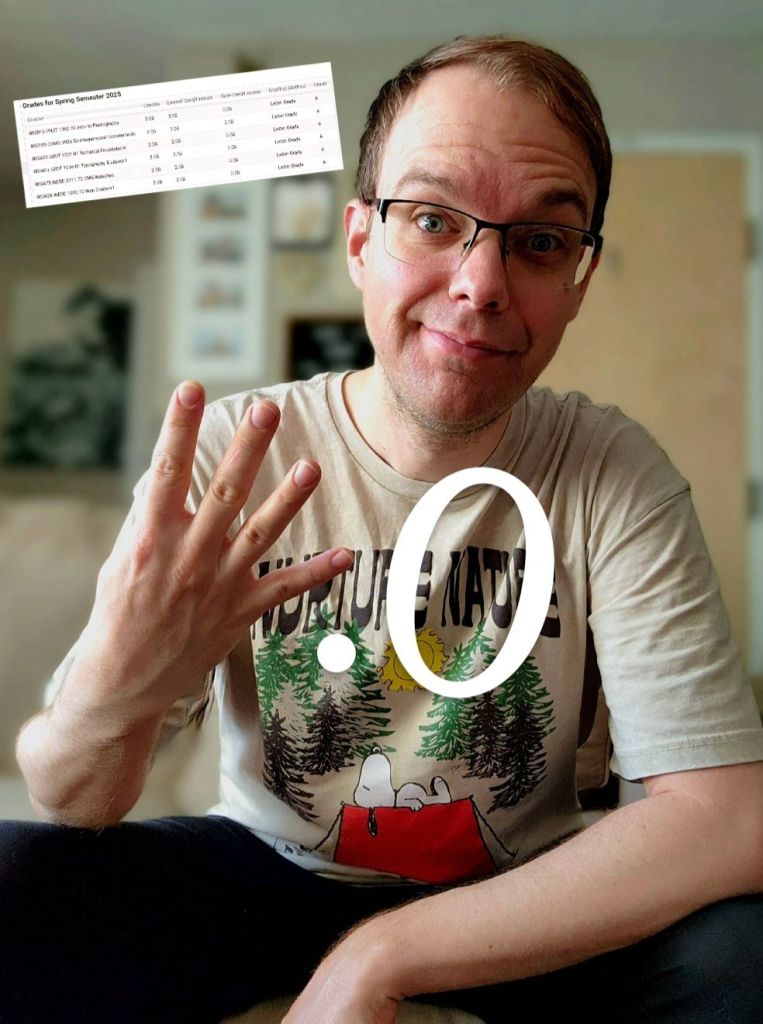
Earlier this year, I entered my first college writing contest as myself (after many years of writing college papers for other students anonymously). The results came in last night: my personal essay won first place!
For my efforts, I receive a monetary prize, my work will be published by DCTC, I get to sit down for an interview with a member of their staff, and I earn a whole 24 hours where I don’t think I’m a complete imposter and the absolute shittiest writer to ever pick up a pen (being a creative is great, 10/10).
First, a little back story: last semester, I read an essay called “Mother Tongue” by Amy Tan (an author best known for The Joy Luck Club) as part of my Composition class. In the piece, she talks about how her mother’s “broken” English had an effect on her perception of her parent. Reading it, I related deeply to her and this idea of not being able to separate language from truth and identity; my mom only spoke American Sign Language and, while on the surface it has similarities to English, it really is its own language and ASL can seem “broken” in comparison.
So I wrote a response essay called Mother Hand. After I submitted it for the course, it got a kind response and my instructor suggested that it would be a strong entry for the DCTC Writing Contest. I didn’t disagree, and now here we are, a blue ribbon winner!
If you’re from around here, you know I write really personal (some would argue too personal) stuff. This still stands out because it’s a topic I haven’t really talked about, it’s uncomfortable for me to unpack, and it’s longer than my typical pieces on the internet.
I hope you enjoy it? All my love from this side of the wires. Hope you’re all hanging in there and have recovered from that Severance finale (I have not, for the record).
Mother Hand
Dennis Vogen
In the essay “Mother Tongue,” author Amy Tan details her relationship with her mother. She describes their mutual love of language, their differences in ability and expression, and admits that, when she was younger, her Chinese mother’s “limited” use of the English language limited Amy’s perception of her. Amy grew to realize how wrong she was.
I related deeply to this piece: my parents are deaf, both used American Sign Language, and my own perception of my mom could be shuttered when she was, in reality, one of the brightest, funniest, and most creative people I have ever known.
I felt like Amy got me from the first sentence. She shares immediately that she is “not a scholar of English or literature,” followed by a declaration: “I am a writer.” I, too, am a writer, someone who thinks about words obsessively and loves the world of language. Amy talks about her many “different Englishes” and how she uses them all; my mom used her hands beautifully to communicate, teaching me how to do the same, giving me one of my Englishes. The way we speak changes depending on who we’re speaking to; Amy realized this while giving a speech she had given many times before, this time with her mother in the room. I had and have a hard time using ASL and speaking simultaneously; they are not the same, and their linguistic overlap creates a cognitive dissonance that’s difficult to reconcile, if not impossible for me.
The examples Amy gives of the “broken English” her mother has used reminded me of my mom’s speech patterns. ASL is not an exact English translation; it sounds broken when you move it from sign to speak. Because of this, I sometimes thought less of what my mom would say, due entirely to my bias that English was somehow a superior language. I think I felt this way towards every language I didn’t understand and my lack of comprehension, ironically, was the source of this disrespect.
Amy refers to her “family talk” as a language of intimacy, and that feels right to me. ASL is a language of my youth and familiarity, and though I don’t speak it as frequently now, I am a different person when I do. Using sign shifts me and my being into a different frequency. Amy uses the phrase “mother tongue” as a term to describe the language that “helped shape the way I saw things, express things, made sense of the world.”
When our mothers used us, it also colored our perspectives. Amy’s mother would have Amy call the bank and pretend to be her; my mom used me as a translator, for everything from my own school conferences to asking the McDonald’s employee if we could have a different Happy Meal toy, because we already had this one at home. These experiences gave weight and value to having a certain set of communication tools.
Amy describes a serious medical situation that paralleled one of my own: her mother’s doctor loses a CAT scan for a brain tumor that requires her to step in to resolve it by using her perfect English. When my mom was diagnosed with cancer, she was assigned a translator that she had trouble understanding. When we asked for a different one, we were told there were no more available. So my sisters and I were left to do what we had to, and I was the one who explained to my mom that her chemotherapy session wasn’t successful and that we had to prepare her for hospice. Often those who wield the many Englishes are responsible for stitching them together.
As Amy did, I eventually learned. Before she left, my mom taught me the importance of every kind of communication, which is more than just the words. Facial expressions, body language, physical gestures, emotional responses, touch and smell and sight and sound. Her love and dedication to animals showed me that every living thing has something to say, and I should be willing to listen, beyond my ears and with my heart. The only limits we have for each other are our personal boundaries of compassion and empathy, which she erased from others with her smile and a hug and her boundless love. My only regret is that I didn’t lose my limits sooner.
It’s no surprise I’m stressed out (because I live on this planet and this planet does not have its shit together whatsoever); I’m ambitious yet anxious, careful yet crazy, busy yet broke.
I was walking past the bed and saw Marvel sleeping under the sun on our sheets, and I will never pass up an opportunity to kiss a deserving puppy taking her nap. I looked at her as she soaked up the rays of a gas giant 93 million miles away and I thought:
“This is what it’s all fucking about.”
All the empires and wars, all the wealth and taxes, all the knowledge and tests, all the supplements and pills, all the honesty and deceit, all the faith and lies, all our haves and wants, all the disease and science and death, all of these things that humans decided life were about are wrong.
Life is a dog sleeping in the sun.
It never really gets any more important than that.
It’s about being in the moment right now and it’s eternal at the same time.
It’s the joy and the serenity and the fulfillment of the promise of life.
It’s listening to the universe and being heard back, no matter where you are.
And I really need to remember this more often.
Human beings are incredibly stupid, but the animals never forget.
Over the past few years, I’ve really gotten into soccer; a few TV shows like Ted Lasso, Welcome to Wrexham and Onside: MLS helped me see the beauty of the game through narrative, and I’ve been adoring the Minnesota United and their loyal community, mostly from afar.
I saw a few Loons matches years ago when they were playing at the U of M stadium while building their own; until this year, I had never visited Allianz Field in St. Paul. I joined the Preserve last year and, over the most recent holiday season, they offered a deal where you could blindly buy the same seat to the first two matches of the year (and get a cute hat to boot!). I went for it.
I’m so glad I did. I can say, hands down, that these matches are the most the fun I have ever had at a sporting event. The stadium is beautiful, the food is ridiculous, the energy is electric, the vibes are immaculate. Nearly every person I bumped into was an absolute delight of a human being. (I actually ran into one of my favorite cousins at the home opener!)
I went alone, but it never really felt like it. The United community is a big carton of good eggs. That being said, if anybody ever wants to go a match or has an empty seat available that needs filling, you know a guy! I’ll even let you borrow my scarf! (But not really, no, you should really get your own.)
These are my photos from the first two home games of the year: the first against Montreal on March 1 (it was insanely cold!), the second against reigning champs LA Galaxy today, March 22 (it was insanely beautiful!). We beat Montreal 1-0 and drew LA 2-2, and both were enormously exciting matches. ⚽️
And have you ever considered our individual knowledge (or lack thereof) as a significant reason for the tension and division in this country?
I was savoring a wonderful article by Laura Kennedy a few weeks ago; it was a list of advice to the reader based on all of her work so far. One of the pieces really stuck in my teeth:
“When you think ‘the other guy’ is nuts or stupid, put serious intellectual effort into constructing the most charitable and strongest possible argument in favour of their position. Avoid engaging in conflict or critique until after you’ve done this. Inability to do [this] is a sign that you are being prejudiced, intellectually lazy and engaging in poor reasoning. Work on this as a matter of urgency.”
It bothered me. Not because I disagree with it; I think it’s true! But lately, and often, when I try to stand in a position or see a situation like somebody else does, I just can’t; it is devoid of logic and sense and heart.
Enter the term “knowingness.”
One of my absolute favorite writers Brian Klaas wrote an essay on the matter this week, and helped explain it: “Knowingness is a term coined by philosopher Jonathan Lear. It’s defined by a relationship to knowledge in which we always believe that we already know the answer — even before the question is asked. It’s a lack of intellectual curiosity, in which the purpose of knowledge is to reaffirm prior beliefs rather than to be a journey of discovery and awe.”
Sometimes knowingness is the answer.
This is when people refuse to take in new information that challenges what “they already know,” which often isn’t true at all.
Forget the idea that politics is the big divider. It could just be as simple as this: we can’t agree on anything because some people refuse to learn anything.
Klaas proposes that there are two distinct subsets of knowingness in modern society: type 1, the people who think they know but they don’t; and type 2, the people who don’t want to know.
Klaas continues: “Intellectual exploration is a uniquely human gift, producing the most extraordinary pleasure for those who engage in it. As modern humans, we have access to more knowledge than anyone, ever. Even the poorest, most uneducated person has more quality information available to them today — in public libraries and on the internet — than the richest scholar with packed mahogany bookshelves from bygone eras. And yet, paradoxically, deliberate ignorance has become one of the biggest threats to our fragile democracies. In the past, we needed to worry about uninformed voters, those who didn’t know much about politics. These days, we need to worry about the much more dangerous misinformed voters. Uninformed voters often recognize the limits of their knowledge and are therefore more hesitant. Misinformed voters are certain they know something they don’t — and they don’t hesitate to act, sometimes aggressively, on those false beliefs.”
Jonathan Malesic speaks on the phenomenon today: “In 21st-century culture, knowingness is rampant. You see it in the conspiracy theorist who dismisses contrary evidence as a ‘false flag’ and in the podcaster for whom ‘late capitalism’ explains all social woes. It’s the ideologue who knows the media has a liberal bias – or, alternatively, a corporate one. It’s the above-it-all political centrist, confident that the truth is necessarily found between the extremes of ‘both sides’. It’s the US president Donald Trump, who claimed, over and over, that ‘everybody knows’ things that were, in fact, unknown, unproven or untrue. Knowingness is why present-day culture wars are so boring. No one is trying to find out anything. There is no common agreement about the facts, and yet everyone acts as if all matters of fact are already settled.”
So how much do you know? Is it enough, maybe, to expose to you the idea that you don’t know much at all?
Because that’s the truth. And until we find common intellectual ground (and our curiosity!) again, things are just going to get worse, no matter how much good information exists.
You can say a lot of things about Eric and I (and we’ve heard it all, knock it off!), but you can’t say we don’t try big things!
When I was a kid, I promised myself that when I made my own comic, I would do it the “right way”: with paper and pencils and ink, and I would do everything.
That’s how I made my first graphic novel, The Weirdos, along with blood, sweat, tears, anxiety, adrenaline, a complete lack of experience and a certain naïveté.
I drew it all on giant sheets of watercolor paper (because I had big dreams of coloring the comic with paint!), went to my local FedEx to scan every single page by hand, and used an old computer to do the rest.
The result was nothing less than art, an absolute expression of who I was at the time: a newly sober person who had to start deconstructing and then rebuilding himself the right way after completely changing (and saving) his life. It looks like nothing else on the shelf, because it was made by me, and I am nothing if not a weird little outsider with little talent, a lot of passion, and a heavy heart.
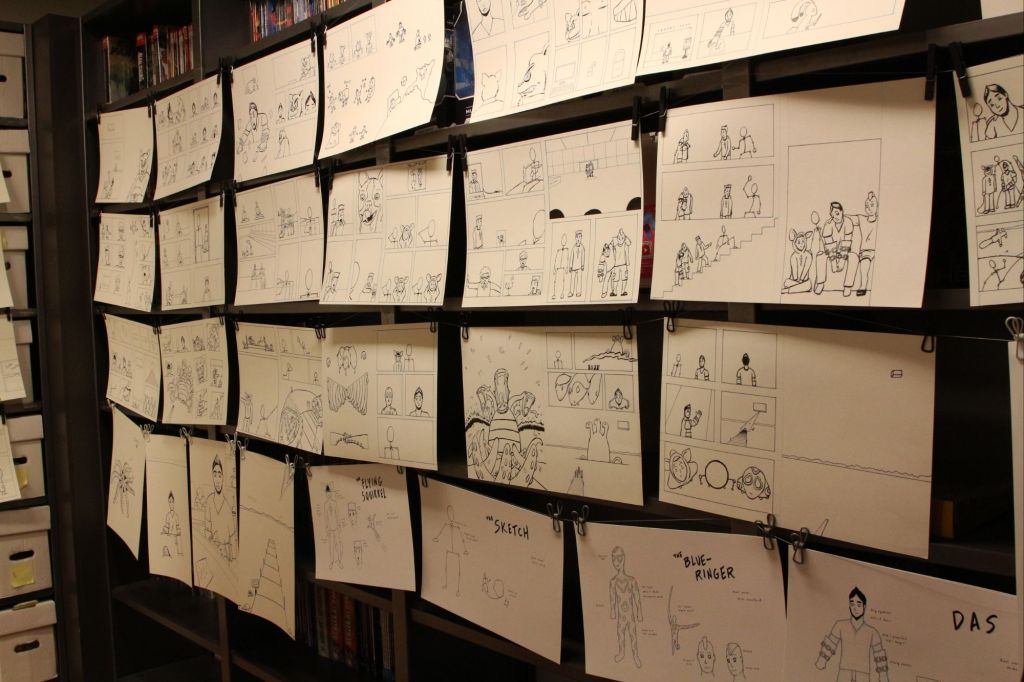
On May 10th, 2025, we’re going to be doing an art gallery at Mind’s Eye Comics in the Burnsville Mall; you’ll be able to see all the pages as they are, the purest expression of what I created from 2018 to 2020, when The Weirdos: Volume I was released.
Eric and I really believe in the value of art and comics and community, and this event is just the latest expression of those deeply held beliefs. We’ll have coffee and snacks and top shelf conversations. Come hang out and celebrate the idea of getting better through art with us.
When I wrote my novel Cold World, I compared it to building a house: on its own, it’s a complete story, saying everything that I wanted to say at the time.
But I also left some room.
In the construction of the book, I allowed myself space to build up, down, or sideways if I ever wanted to; meaning, I could write a sequel, or a story about characters that appear and disappear in the context of Calef’s story… or I could write about what happened before.
Hot Bloods is the tale of an asteroid.
It’s a standalone short story that is the account of the crisis that turned our world cold, eighty years before the events of that book. You’ll experience Oscar’s life as a four-year-old boy in 2142; you’ll get to meet Jonah Mesh, billionaire prophet and architect of our desolation (sorry, that’s a Cold World spoiler!).
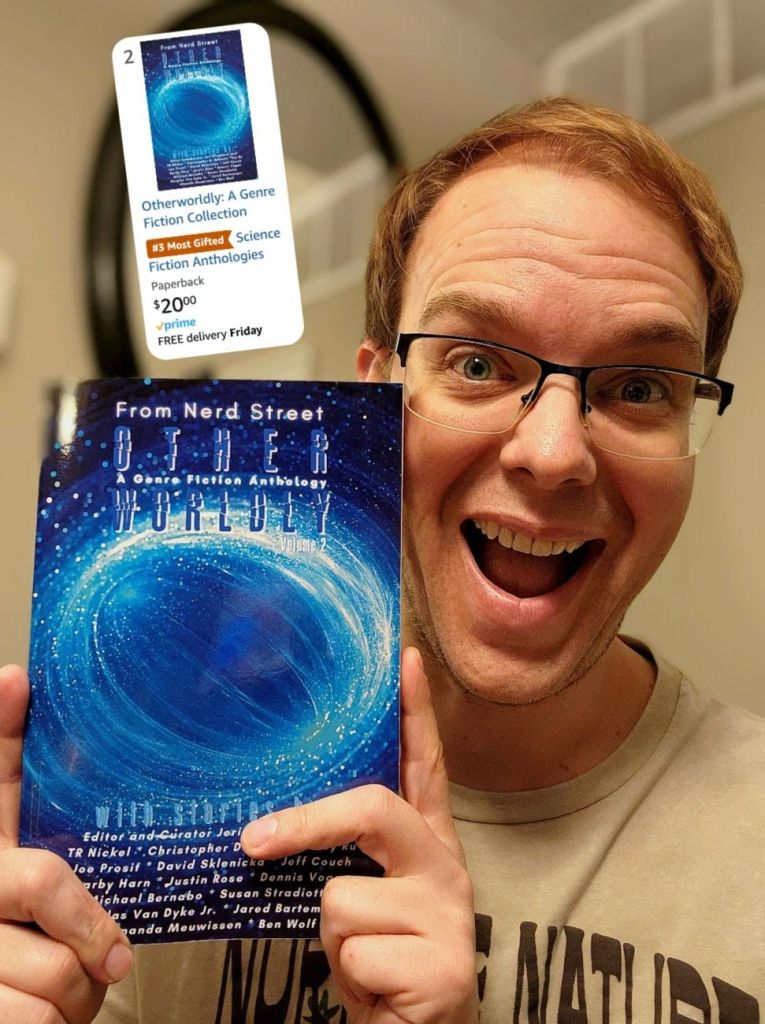
So: how will you be able to read it? This will be my entry for Other Worldly: Volume 2, the next installment of our Nerd Street anthology series. Meaning that, for a whole year, this collection will be the only place you can find it!
And I hope it also introduces you to a whole lot of other incredibly talented local writers, many of whom I’ve been lucky enough to befriend and sit with during panels at conventions.
More details on Other Worldly 2 as the release date is revealed and it gets closer. You may as well read Cold World again in the meantime! 🩵
I am (clearly) a massive fan of Daredevil; this photo was taken on one of my best friend’s wedding day. (No, he did not allow me to stand before the congregation like this, a missed opportunity in my opinion.)
The new season just started on Disney+ and it is not only fucking excellent but, more important than that, it’s necessary.
It reflects our cesspool of a nation and does what superheroes do at their best: offer condolences, give support, spark inspiration and hope, and present solutions for our time. The show is comforting me and empowering me at a time when I really need it.
Comic book writer Mark Waid (who has written Daredevil) posted an essay today that is required reading. In it, he says that, in reality, hope and doing the right thing is not enough; that those ideals instilled in us by faith and pop culture are fairy tales, and when confronted by bullies and villains who don’t play by the rules or follow the law, we, by necessity, have to bend or change those rules and laws, too.
I am inclined to agree.
We have to be willing to act; we have to be willing to fight, on whatever fields the powerful stand.
I was talking to my friend at work the other day and we were discussing systems; the gears put in motion that turn our world. I reminded them, just like I remind everyone else: we invented every single system. People did. Broken, flawed, ignorant, selfish little human beings. We made up every system.
Which means there is no system that cannot be changed, broken, or reinvented. If you think differently, you are objectively wrong, and this is your wake up call.
I saw another line earlier this week that really struck me: What you do is what you believe.
What you do. Not what you say you do.
So, if you say you believe in kindness and compassion and treating others with respect and leaving this world a better place than we found it, but you picked up a pen and filled in a box on a ballot for a person who is the opposite of those things, then guess what? That’s who you are. That’s what you did.
Even if you say otherwise.
And that remains true, until you decide to do something else.
Take that from a piece of work who has to learn that lesson every day, and really takes it to heart.
Anyway: Daredevil just reminded me that I am thankful for superheroes. Not because of what they say, but because of what they make us feel we can do.
After over a year of it living its own beautiful life in an anthology collection, I am so excited to be able to share this short story with a whole new audience. Namely: you.
First, a little history: last year, my friend Jeri put together an amazing team of writers to create Other Worldly: Volume 1, a genre fiction anthology. We published and sold these in collaboration with Nerd Street, who run my favorite convention, Twin Cities Con. I wrote an original piece, The New Romantics, exclusively for the collection; as part of our contract, the story was only allowed to live in those pages for one year.
Well: that year is up.
I got such a lovely reaction from the people who discovered it and fell in love with its strangeness, a tale of love and war and violence and technology and, most of all, loneliness.
I don’t want to ruin any of its surprises, but I will talk about its title: who are the New Romantics?
Yes, I am aware that it’s a Taylor Swift song, but that’s not where the title came from; I am a strong believer that we are at the beginning of a new Romanticism movement, and my feelings are both inspired and validated by one of my favorite culture writers, Ted Gioia.
• • •
In his Substack, Ted writes:
“A new Romanticism? Could that really happen? That seems so unlikely.
Even I didn’t take this seriously (at first). I was just joking. But during the subsequent weeks and months, I kept thinking about my half-serious claim.
I realized that, the more I looked at what happened circa 1800, the more it reminded me of our current malaise.
Rationalist and algorithmic models were dominating every sphere of life at that midpoint in the Industrial Revolution—and people started resisting the forces of progress.
Companies grew more powerful, promising productivity and prosperity. But Blake called them “dark Satanic mills” and Luddites started burning down factories—a drastic and futile step, almost the equivalent of throwing away your smartphone.
Even as science and technology produced amazing results, dysfunctional behaviors sprang up everywhere. The pathbreaking literary works from the late 1700s reveal the dark side of the pervasive techno-optimism—Goethe’s novel about Werther’s suicide, the Marquis de Sade’s nasty stories, and all those gloomy Gothic novels. What happened to the Enlightenment?
As the new century dawned, the creative class (as we would call it today) increasingly attacked rationalist currents that had somehow morphed into violent, intrusive forces in their lives—an 180 degree shift in the culture. For Blake and others, the name Newton became a term of abuse.
Artists, especially poets and musicians, took the lead in this revolt. They celebrated human feeling and emotional attachments—embracing them as more trustworthy, more flexible, more desirable than technology, profits, and cold calculation.
That’s the world, circa 1800 . . . Could that happen again?
Imagine a growing sense that algorithmic and mechanistic thinking has become too oppressive.
Imagine if people started resisting technology as a malicious form of control, and not a pathway to liberation, empowerment, and human flourishing—soul-nurturing riches that must come from someplace deeper.
Imagine a revolt against STEM’s dominance and dictatorship over all other fields?
Imagine people deciding that the good life starts with NOT learning how to code.”
• • •
These are the ideas and feelings that inspired my short story.
I hope you read it; I hope you love it. I wrote it because I needed it then; it means just as much, if not more, now.
P.S. I’m currently writing my piece for Volume 2 and I know some of you are going to be floored. It’s a standalone story that is also a prequel to one of my books…