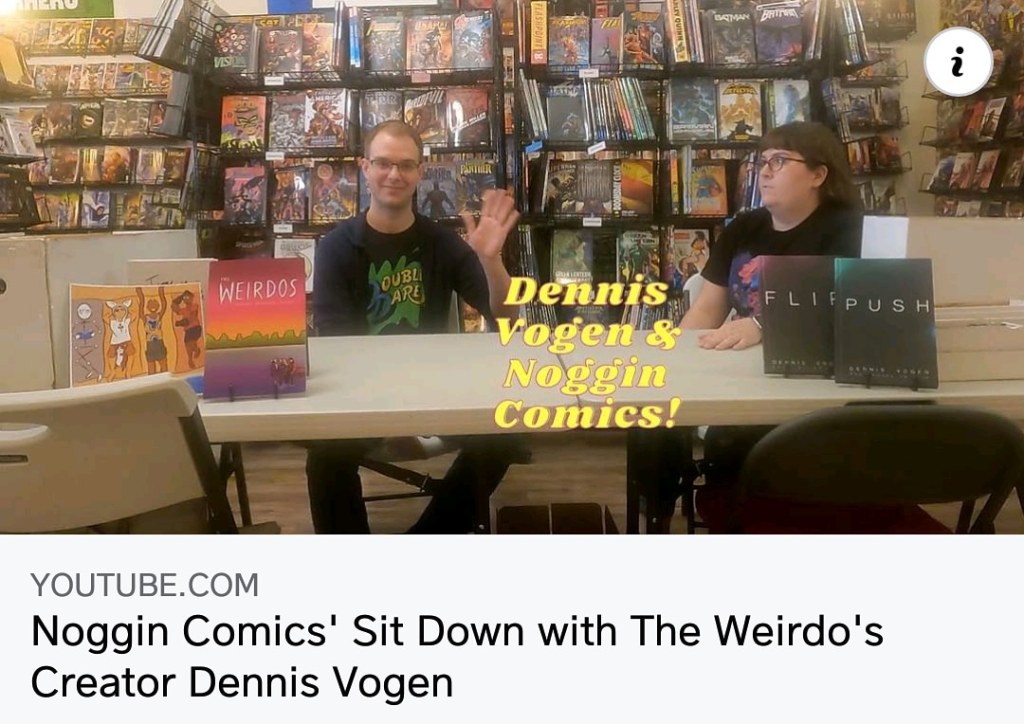
Who has a brand new interview for your eyes and ears to behold? Why, we do!
If you’ve never met Nora and Kyle (otherwise known as Noggin Comics), then you’re missing out on the sweetest duo in our comic community. They have been nothing but kind and insightful since I met them at a convention years ago, and I jumped at the chance to be their first interview, which Issues Needed in Apple Valley was fantastic enough to facilitate.
Despite a few initial butterflies, we had a delightful, energetic chat and (as you can clearly see) I could have talked to them for another eight hours. We discuss my work, life, comics, television, film and more.
All to remind you that in just 9 days, on July 21st, we will back at Issues Needed to celebrate some books with a good old-fashioned get-together. I really, really hope to see you soon! 💜
I hope you enjoy our talk half as much as we enjoyed talking.
It’s a complicated thing, being a being who has complicated thoughts.
It means that you’re as much of the things you don’t say as the things you do.
Regularly, when I go to check on something I’ve posted, I’ll see those three tiny dots dancing in the comment section. It means someone is typing something. So I’ll wait for a moment to see what this mysterious person has to say, and then nothing will be said. This has happened hundreds of times.
And then I’ll wonder what that person had to say. Were they mad at me? Were they about to call out my entire existence and reveal me as the fraud I am? Did I touch them in such a profound way that it compelled them to try to express it to me? Did they laugh or cry or have something equally profound to say back to me?
Who the heck is the person even having all these feelings anyway?
And it reminds me that we human beings do this all the time. All day, we have these three dots in our heads, ready to react to any- and everything around us.
Sometimes, we hit enter. We say the thing that the dots represent in our minds.
But mostly, we don’t.
And just because we don’t, it doesn’t mean that the thoughts we have aren’t as much a part of us as the things we share.
And that’s complicated, yo.
Because you have these things living inside you, and most people only know a sample size version of it. So we feel misunderstood and misrepresented and there’s honestly nothing we can do about it.
Except to keep hitting enter.
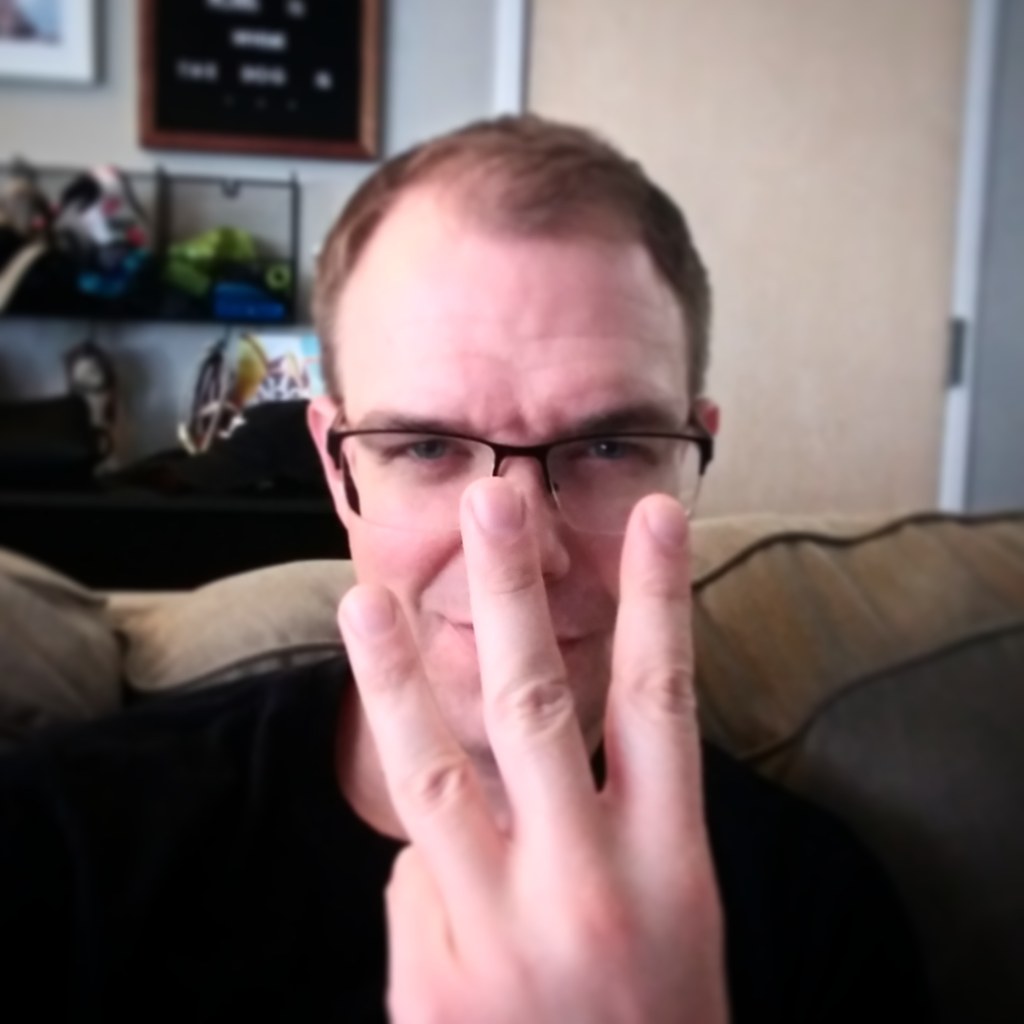
So I hope the next time you’re the three dots I see, you let me know what they mean.
Whenever I felt invisible, my mom used to remind me I wasn’t.
That sounds stupid to say, but it’s true, and now on days when I feel invisible sometimes I worry I won’t be found by anybody.
It is very easy to look up at the sky and be impressed by a star.
How could you not be?
It’s radiating so brightly that you can see it from trillions of miles away.
What some people don’t know (or maybe don’t think about) is that when light hits you while you’re outside, it reflects back up into the atmosphere and back out into space, carrying your essence through the universe, maybe even back to that star.
I try to think about that when I’m impressed by people and I feel invisible.
I can’t help but imagine that other people are stars — whether I bump into them in real life or scroll across them on social media, they burn brightly, they’re impossible to miss, and I am in awe.
That is enough to make you feel insignificant, especially when you don’t need the help.
So I remember that light bounces off of everyone. And then it reaches places you don’t even think about.
My mom was a star who reminded me that I was light, too.
And if you’re reading this right now, then I’m a star, or a place you don’t think about, and I’m letting you know that I can see your light, bright and fierce and one-of-a-kind.
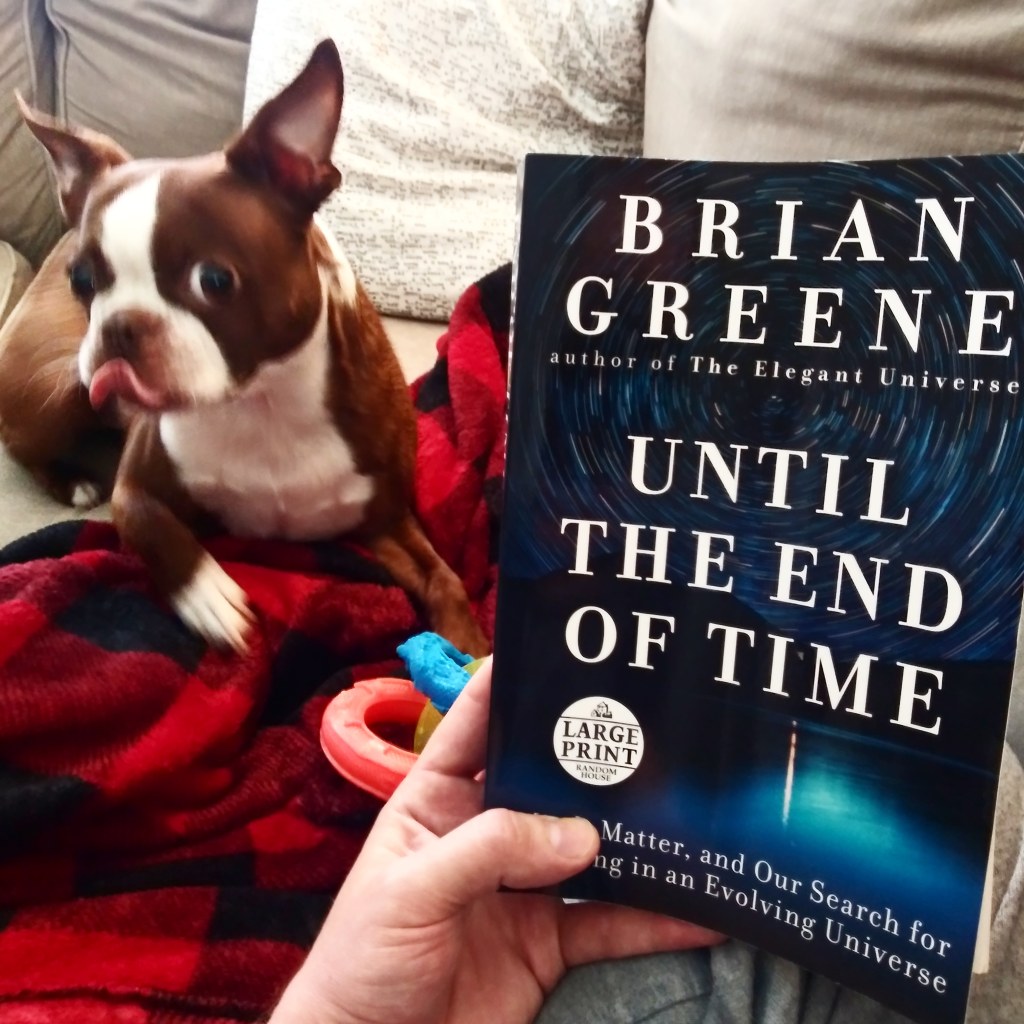
I’m obsessed with Brian Greene (but don’t tell him, play it cool). He’s a physicist who writes and talks about science in the best way: for everyone.
He’s been on my radar for years, but I’ve only really been getting into his work over the past few. And not just his own, but also the things he recommends (like The Varieties of Religious Experience by William James, which became immediately influential for me).
I just finished his newest book, Until The End of Time, and I have to say: if you’re going to read any of them, this is the one. Because, like Stefan would rave, this one has it all: the beginning of time, the end of time, all the stuff that happens in-between.
Honestly, it’s a lot. And to continue being truthful, all of it is essential. It starts with particles and ends with them, covering evolution and entropy, the rise of human beings (and with people, particular practices like language, religion and creativity), and the universe at infinitely large.
Brian’s work and words give me so much perspective. The biggest thing he so elegantly and regularly reminds me is that life is short. Not just for you or me subjectively. No, our existence isn’t even half a blink of an eye in the history of the universe.
That means our bright flash of existence is precious, ephemeral, and powerful. And it causes me to look more closely at my time, really think about what’s important, and do with it what no other person will.
You have the one life. No more, no less. And no moment in it will ever be replayed or happen again, at least not in the exact same way.
From one bag of particles to another: I highly recommend this book, and Brian’s work in general. It stimulates every sense and it engages every aspect of our being.
The following is the first chapter of Push, out July 21st, 2021.
1
My dreams aren’t what they used to be.
They used to be vivid, wild, free.
Now they’ve become the home of everything I fear.
My life itself, though, is a juxtaposition of my sleep; when I’m awake, I’m okay. At least, I think, relatively.
It’s been a year since I discovered that Static, a person who I thought I invented in my dreams, was actually my real-life best friend Tim, who died of an aneurysm and who I had repressed in my memories. It’s been a year since I’ve seen Alen, the serial killer within nightmares (and possibly of my own delusions), who I was desperately trying to stop, and who I have never actually met with eyes wide open. It’s been a year since Regan told me that we could be together, and she hasn’t let me go yet.
I thought when my waking life started to come together that my dreams would follow suit. That has not been the case. My sleep unravels me in a way that I can’t seem to keep zipped shut, a spool of subconscious entropy.
Every dream I have had since that day has been a parallel multiverse of monsters, shadows and worst-case scenarios.
And the worst part is I can’t tell anyone.
I have made the few people in my world who actually care about me worry more than anyone should have to worry in a lifetime. Now that they think I’m alright, I intend to keep it that way. The joy I see on their faces when they think I am happy and healthy is almost enough to make me feel happy and healthy.
Almost.
There is an enormous sense of dread I carry that acts like a shadow moving with the sun; when I wake up, I feel that dread spread straight behind me, as far back as the western horizon. Throughout the day, I feel the dread get shorter, creep closer to me, until it starts to shoot from my feet forward. There, I can see it grow, until it’s insurmountable, until I can’t see the end of it, and then I have to lay down and fall asleep into it.
And here I am, asleep, dreaming that I’m in a familiar house.
It’s the house I grew up in, and I’m sitting in my bedroom, but it’s decorated like it was when I was an infant. Everything is bathed in a deep blue light, and I’m waiting. I rub my hand across the wool baby blanket hung over my crib. I’ve had this dream countless times and, in it, a murderer who has chainsaws for hands and a face made up only of eyeballs and one screaming, bleeding mouth will suddenly appear at the front door. He’s a man of few words (understandably, what with all the screaming and bleeding from the mouth), but once I was able to ask him his name; he calls himself Looky Lou. The house will then spontaneously start on fire, and I will have two choices: exit from this room in any way and inevitably have to confront the killer, or stay in the house until it burns up and collapses on top of me.
Either way, I will come within seconds to losing my life before waking up in a cold sweat. I will tell Regan that I’m thirsty, so I can walk across the hall and sit in the bathroom for a half hour to compose myself, so I can stop shaking long enough to set off any kind of alarm.
SLAM.
The monster is at the front door. I wish I had a fast-forward function or chapter skip in my dream state. A few times I’ve tried to call upon Shelby, my dream-scythe, to help me fight off the killer, but she hasn’t shown up for me since that day, either.
Like Tim.
Worst of all, though . . . I can’t flip.
Since the day that everything changed, the thing that changed the most was the way I dream. Now I feel lost and I feel powerless and I don’t know how to fix it.
. . . I think as I turn down a smoky hallway, trying to find a way out of the house I haven’t thought of before. I’ve tried every door and window, and each time Looky Lou was waiting for me outside. This usually leads to a chase, where I start to run away in slow motion while he cruises as though he’s using a moving walkway; this ends with him catching up to me as I wake up, breathless.
I’ve tried the roof, and that is probably the worst way out. I am rarely able fly in dreams anymore, if ever, so what happens is I get caught on top of a burning house, and my dramatic ass usually starts a thunderstorm once I’m outside. After I check each wall for a way to climb down, I turn around and the monster is usually waiting right behind me, where he then does his crazy chainsaw thing and I wake up, soaking wet.
There is one idea that has crossed my mind but the logical part of me knows it’s a terrible one and there’s no point in trying: the basement. When I walk past that doorway, smoke is usually bellowing out, and I don’t think there’s a way out down there (though dream logic doesn’t always and sometimes rarely follows actual logic). I stop for a moment to consider it once again.
As I’m contemplating, the front door bursts open. Lou is now running down the hallway, straight at me, his chainsaw hands tearing up the wallpaper on both sides. I don’t have a choice. I run into the smoke and stumble down the basement steps. The air is almost solid, and I can barely breathe, but I don’t hear anyone behind me. It’s hard to hear anything at all. It gets harder and harder to see, too.
Pretty soon, everything is silent, hot and black.
I try to flip.
It’s been a year since I could move my physical body in a way so that my dream itself can switch states, but that doesn’t mean I don’t try every time.
“Flip,” I whisper to myself, the creator of dreams, quietly.
“Flip,” I say again, trying not to get the attention of Looky Lou.
But my attempt is yet another failed one. I can hear the roaring motors approach. The end is near, and, exhausted, I welcome it.
Then there’s a faint light. I see it in the corner of my eye. I don’t recognize the color, but I see something glowing, through the swirling waves of heat, the dense clouds of darkness, just beyond me. From the light comes something even more unexpected: voices. Many voices. They overlap upon and scramble one another so I can’t hear any specifically, but they’re there, calling to me through the scorching quiet.
I reach out.
It’s all too far.
I take a few steps forward. The former growl of the chainsaws is now a chorus of snarls, and I can feel him moments behind me, but I keep moving, my hand outstretched.
“Liam . . .” the voices echo.
I pull my hand back. Just as quickly, I feel the smoke fill my lungs, falling and resting to the bottom and piling itself to the top. I can’t breathe. I’m choking, my jaw is twisted, and my mouth is dried with blood. Looky Lou bursts through the wall of smog and a chainsaw finds its way between my neck and shoulder. I can feel the tiny blades vibrate through my skin, shaking my whole body, shredding their way down to my heart.
The dream is ending now. Instead of light being an indicator, I can feel the absolute black of the fade approaching. As I transition to the waking world, the voices raise together one more time to deliver me a message.
“We’re still here . . .” they call.
“Who are you?” I manage to ask.
“Help,” they plead. “We’re trapped.”
“How?” I cry.
“Push . . .” they answer, before I shoot up out of bed, out of breath, blanketed in wet.
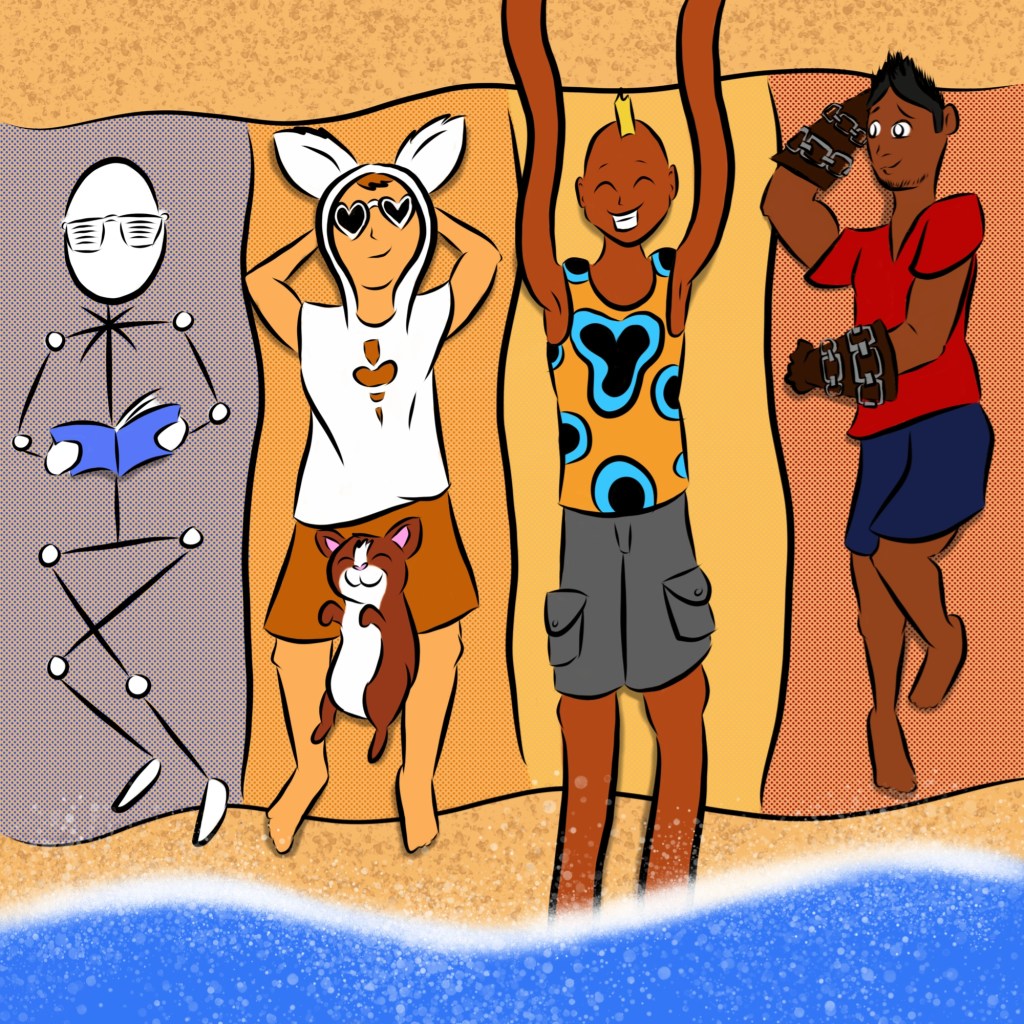
I don’t sell a lot of original art or prints, but I wanted to do something fun (and I wanted to draw my crew!) for my upcoming event on July 21st at Issues Needed in Apple Valley.
So here it is: “Hot Weirdo Summer,” a limited-edition print I’ll have available at the party.
So how much does it cost? Glad you asked. It’ll be free, to the first 25 people who walk through the door, and then they’ll be gone. I am a bad businessperson.
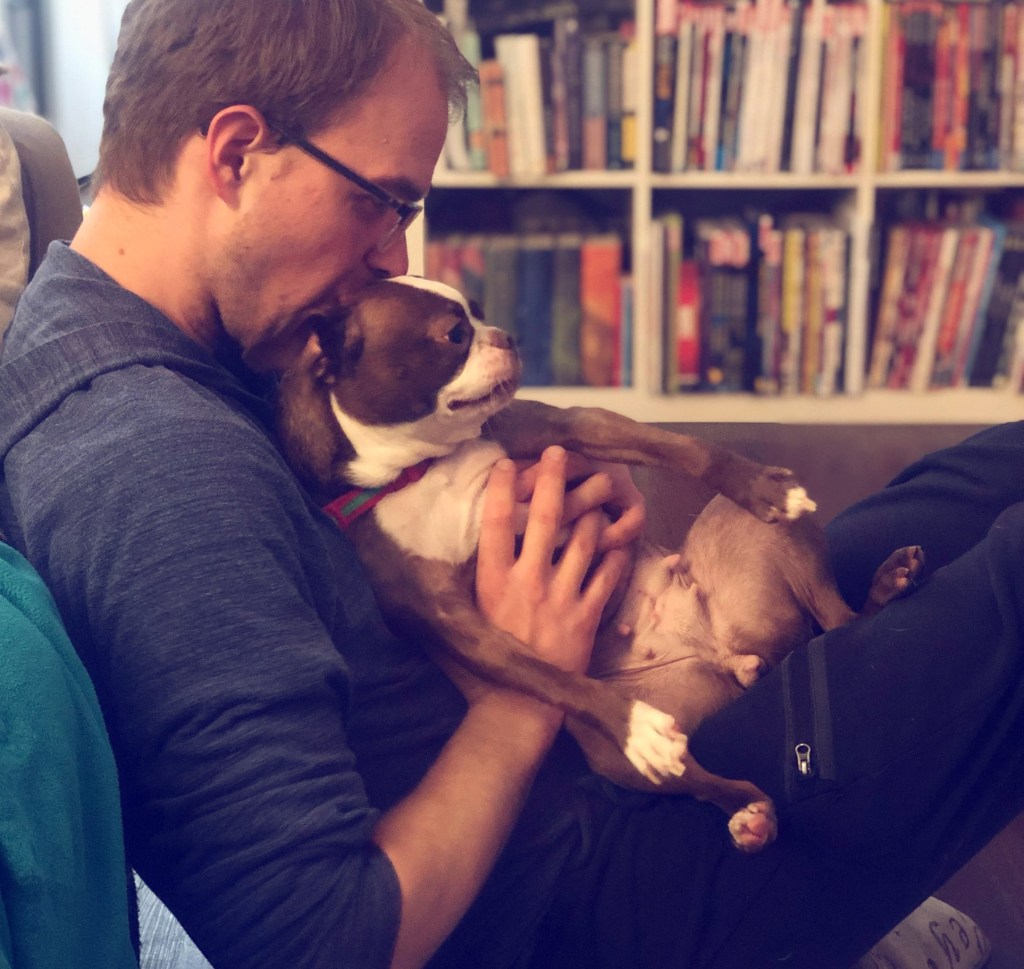
This print is what the season is all about: hanging out with your dog. Oh, and good times with your best friends or whatever, but mainly: hanging out with your dog.
On my recent post about white fragility, someone commented “Your not white.” I think that is a terrific introduction to this essay about race itself.
The commentator wasn’t wrong, necessarily: race is all made up. In Ta-Nehisi Coates’ brilliant Between The World and Me (if you haven’t read it, do; there isn’t a wasted word and it will teach you more in an afternoon than you could learn in a lifetime), he says himself that race does not exist.
But if we’re to believe that words and religions and even our own names are real, then you also have to acknowledge that race is real, too.
Here’s what went down, as simply as I can explain: certain humans said, “We need power. In order to get power, we need to be able to put people in boxes, and then we can put those boxes on levels and that will decide who has power and who does not.”
It didn’t take them long to look around and find the easiest way to identify a person, and by sight alone.
Thus, race was born.
Sure, there are a lot of other factors and this only got more complicated over time, but this is really how it started.
Words are not real. You know that, right? That we just made them up? I strongly believed this when I was younger, and would say any- and everything just to shock people, because it wasn’t real, not really.
Now I believe that even though words aren’t real, intent is. And I am much more careful with my words as a result.
There are people who use words that are offensive or hurtful to many because “the word doesn’t mean that to ME.” How narcissistic. They decide that because they — one person — don’t have a problem with (or a different definition of) a word that hurts millions of others that it is not unkind to use. Note that I didn’t say “wrong.”
Same for religion (and don’t come here saying religion isn’t made up by man, unless you want me to introduce you to the over 4,000 other religions who think you’re wrong and know they’re right).
So, I’m not white. In the same way that the words I’m writing here mean nothing and God isn’t real.
Or… we accept that it’s all real. Words and names and God and, unfortunately, race, which has affected the lives of billions of people during the thousands of years humans have existed on this planet which is billions of years old. For countless, race has defined their entire life’s experience, and for me to ignore that may or may not be wrong, but it is, in my opinion, ignorant and unkind.
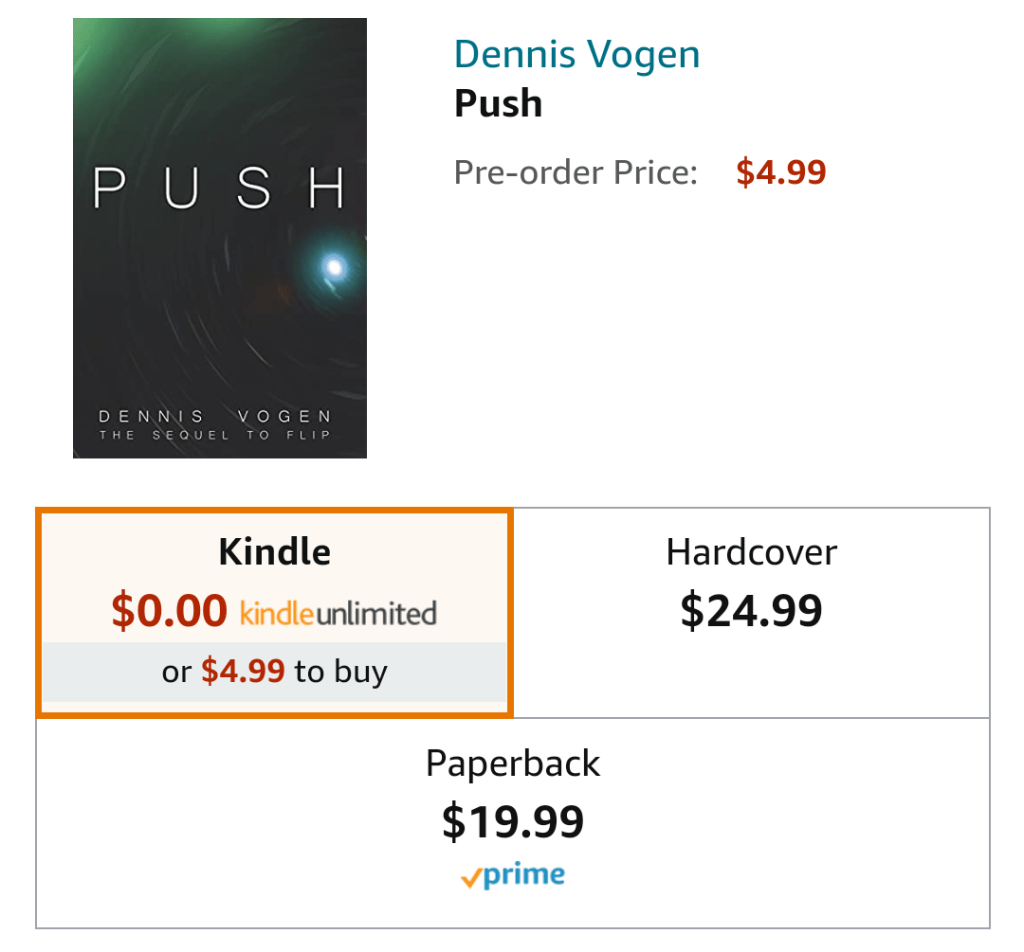
We are moments away from July, and the wait to order Push is over!
You can get Push NOW at Amazon, available in ebook, paperback and hardcover. Order one, order a hundred to send and share with friends, make sure to order a copy or two of Flip if you haven’t read the beginning of the story (because you really should, believe me).
I’ve already ordered my own shipment and will have my books available at Issues Needed in Apple Valley on July 21st for the par-tay if you want to wait until then, too! You can bring anything in for me to sign for free; there will be no funny business of having to purchase anything to get a signature from your 88th favorite author.
Hi! I’m a white person, and this is a post about white fragility. If you’re a white person, I encourage you to come along. I’m not going to just throw things at you that you’ve heard before; no, as is my way, I’m going to share a deeply personal story about myself and show you what that says about an entire race. You with me? Let’s do this!
Last week, we were talking about some heavy stuff at my house. That conversation led to others reminiscing about the stupid stuff I used to do when I drank. Not about the time I wore a lampshade on my head; no, these were behaviors and situations I created that I am deeply ashamed of and are hard for me to relive and remember.
There was definitely a moment I thought: “If I flip a table right now would everyone just stop talking and move on to something else?” But I didn’t derail the conversation or try to end it. I listened. My past is a part of me, like the present is and the future will be.
Do we talk about this stuff every day? No. In fact, the further we get from the way I used to be, the less we talk about it, and the less it hurts me to hear.
And this is the basis of white fragility.
The inability to listen to truths about our past without becoming defensive.
In fact, using my analogy of distance as relief, I’d have to argue that a person who gets upset about the topic of race is a person who is not far away from racist thoughts or behaviors.
The call to arms that is the most hysterical (in every sense of the word) to me is this one, heard in a variety of phrasing:
White person: “They’re trying to make us out to be the bad guy!”
What.
In history, we ARE the bad guys. Objectively. Rarely are people trying to make us out to be anything other than what we’ve been, and to suggest otherwise is clear gaslighting.
The less my past behavior affects the present, the less we feel we have to talk about it.
We live in a country in which nearly every single major issue is still greatly affected by what we’ve done since its beginning.
And that’s why we still need to talk about it. And think about it. And maybe, as we do — and we get farther and farther away from the way that it used to be — it won’t hurt so much to hear, or to think about, and we can do some actual work towards realizing and building a better place for everyone.
My seventh book, Push, is locked and has been submitted for publication.
(It’s not available for pre-order… yet.)
As a creative person, sometimes you plan a multi-year project that, more or less, comes out exactly how you envisioned it (see: The Weirdos: Volume I, Them/Us).
But, sometimes, a story comes along and says: “Hey. I know you’re busy. But I think I’m something kind of special and important and maybe you should drop everything and write me right now.”
That’s what Push is.
Not only did it come out of nowhere and ask to be written immediately, but I honestly don’t think I could have written it at any other time in my life.
I thought I’d answer some questions about Push that I’ve been asked and also could potentially receive.
Q: So, I read the description you shared. The book sounds dark, bro. Is it dark?
A: Push is, in my opinion, simultaneously the darkest and most hopeful book I have written to date. I don’t want to ruin any of the experience, but it very much deals with a phenomena that society discusses at length without any good answers: how can a person who seems relatively happy to the outside world make the decision to take their own life?
Q: Do I need to read Flip, bro? I got things to do.
A: Yes. Absolutely. Some sequels exist as inconsequential pieces of a whole, but neither parts of this story are as meaningful on their own as they are together, and I really mean that. I hope a person can get something out of one or the other, but I really feel like this is a complete work. (These are both novellas, by the way; at average reading speeds, you can finish one in a few hours.)
Q: I review books. I want to review your new book, bro. Will you send me one?
A: Again, yes! I can send ebooks at any time, and paperbacks when I receive them. This goes for any of my books, by the way; just send me a message and I’ll figure out a way to get review copies to you.
Q: When does Push come out, bro?! The wait is killing me!
A: July 21st, 2021! I’ll be having a release party at Issues Needed in Apple Valley that same day for all the books I’ve released over the past year. I hope to see you there!


 The Den