Before this month is over, I have one more Unproduced Work to talk about.
I saved the most important to me for last.
The bunny in this photo is my good friend, Jojo.
We go way back.
I created him when I was a teenager. He lives in a place called Bio City, a town that literally flies over our heads.
He tended to have whatever job I had. If I worked in a grocery store or a gas station, Jojo worked in a grocery store or gas station. He existed as a way for me to express myself over how I felt about work.
It wasn’t until I started at a coffee shop that he got his permanent job: Jojo owned a café that he named The White Rabbit.
But the café isn’t his purpose (even though he cherishes the community he fosters within it).
Jojo is an inventor. His inventions are his passion, his craft, his art. And his inventions drove all the stories I wrote about him.
So what happened to him, and his friends and family of Bio City?
They lived in me, and in a box at the bottom of my closets.
I kept coming back to it, but I never felt ready to share him. He has existed for decades (goodness, I am old, but so is this rabbit) and it never felt like the right time to let him play with everybody else.
I kept him to myself because he’s been one of the only constants of my life, and maybe if I shared him, he might not be mine anymore.
If you’re been following this page for any number of days, weeks, or years, you’ll know that I’m kind of a mess. I’m insecure and a people-pleaser and I’m constantly recovering from something. This rabbit (and, later, The Weirdos and the animals of Brushfire) somehow keep the world at bay for me (pun intended), and they help me make sense of it.
I finished Matthew Perry’s book this afternoon, and I have a lot of feelings about it.
If I were the kind of person to share my feelings, I would do that here, but I’m just not that guy.
jk. Let’s get to it.
I want to start by saying it is not a well-written book, and I absolutely loved it. Its scruffiness is a big part of its charm (and lack thereof); Matty definitely wrote this book, but if I’m wrong and he did hire a person to write it for him, that person did not do a good job.
Matthew Perry is not a likeable man in his book. I believe this is the point.
Addiction makes addicts do things that are not likeable, and sometimes outright despicable. I don’t care if you like me right now; if I told you everything, you would find parts of me and things I have done to be wholly unlikeable, too. In reality, there’s a decent chance you already don’t like me, and that’s a perpetual and deep fear.
The fact of the matter is: addiction is still largely misunderstood by the majority of people, and this is nobody’s fault. You should not have to relate to an addict (and you should count your many blessings if you don’t); you should only have to relate to being human, and to what humans think and feel and want to be.
Matty is a human being in spades. I don’t know if I’ve ever encountered a memorist who is, simultaneously, both so horny and so haunting.
If you came here looking for a boiling pot of addressed gossip and illicit content, you’ll find it in bubbly abundance. No shortage of Hollywood talk here, and he’s candid about his time on Friends, which he admits was the best job in the world, but couldn’t stop him from being who he is.
He’s also open about his childhood and present life, which sometimes feels like a undeserved gift.
It is both immensely comforting and makes me uncomfortably sad to relate so much to the behavior he inhabits. Often, it’s just a giant-sized edition of my own issues.
He and I differ in many and obvious ways, but there is one thing we hold to be undeniably true: this stuff needs to be talked about. Honestly.
And that’s why I think he shows himself to be so unlikeable here: it’s proof of his ability to be honest.
And honesty is both refreshing and in short supply these days.
I’ve seen people who are really upset with him for a variety of reasons, and those people represent what addicts like he and I go through every day.
Who we are makes no sense, and no amount of intellectualism will fix that. What we do sometimes makes even less sense, and thinking about it too hard makes everybody, including us, upset.
It feels impossible to talk about addiction without getting upset.
“Had my habit killed me,” he writes, “it would have killed the wrong person. I wasn’t fully me yet; I was just parts of me (and not the best parts, either).”
The fact that so many people are upset means we still have a long way to go.
I’ve written several series for the web. We actually used to call them that: web series. I don’t really hear that term much anymore, except when used to describe sitcoms starring spiders.
Several web shows I created were never released. Some notable titles include: The Green House, about two immature men who find a baby and decide to take care of him; The Program, about a group of people who try to independently produce a local news show on public access television; and The Aquaman Chronicles, about, well, Aquaman.
All of them made it to the table read and filming stage; some to editing; The Aquaman Chronicles even got two trailers!
But my favorite unreleased show was a sci-fi comedy about a man who lost his girlfriend and uncovered a conspiracy in his small town, which was being controlled by a shadowy organization called the H.I.G.
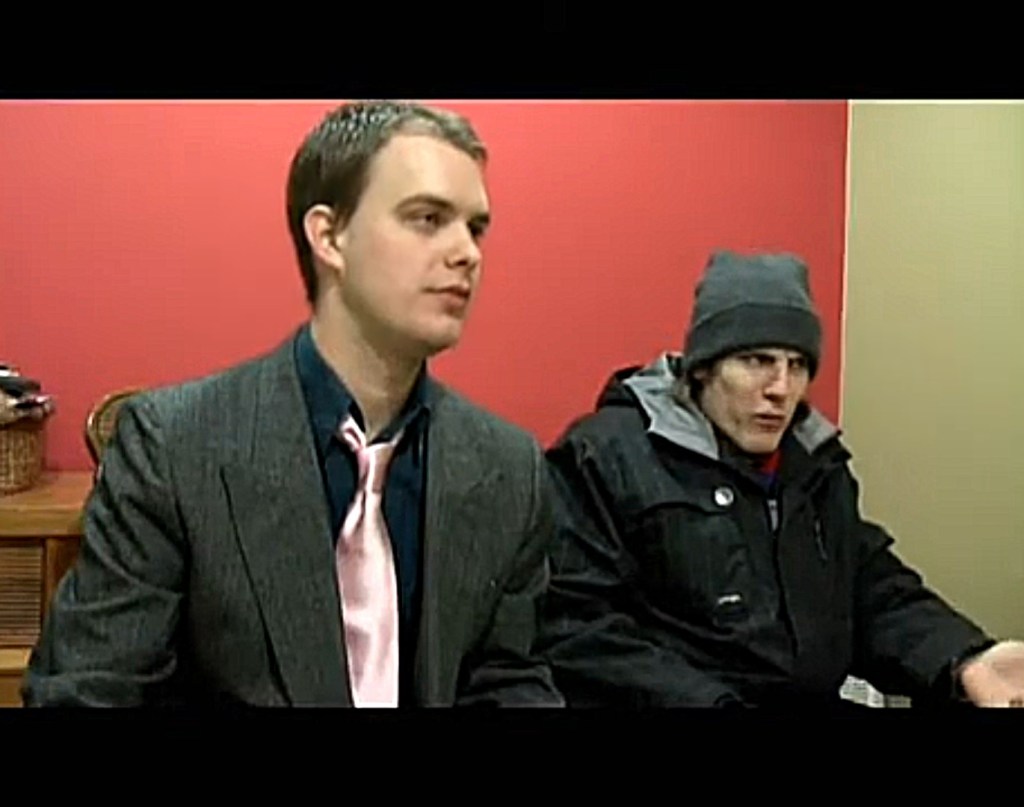
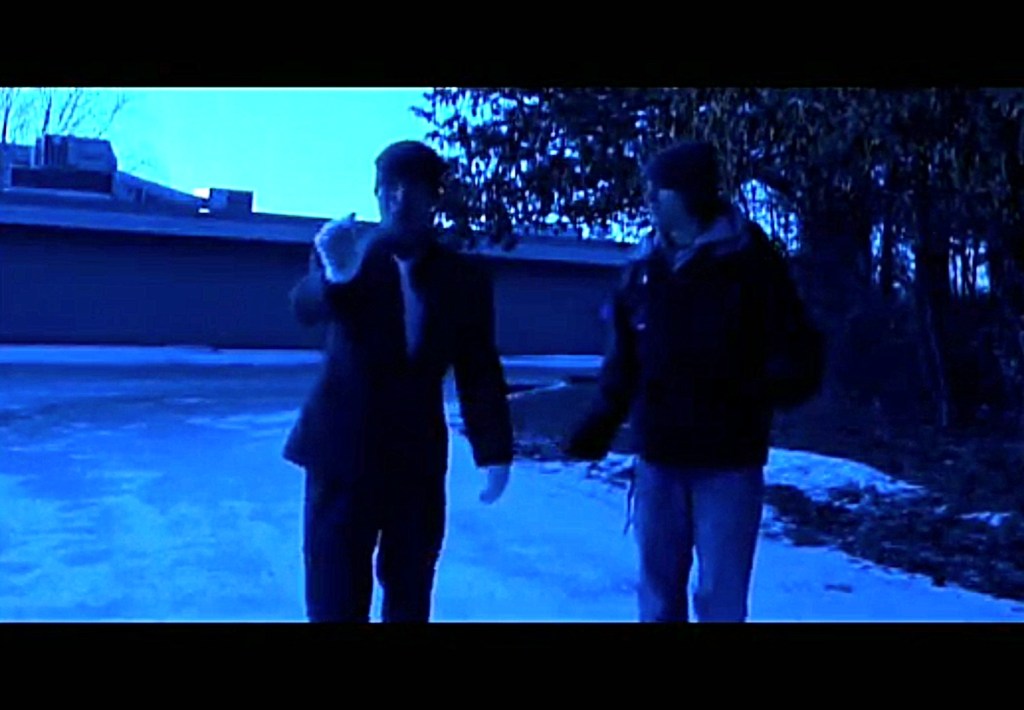
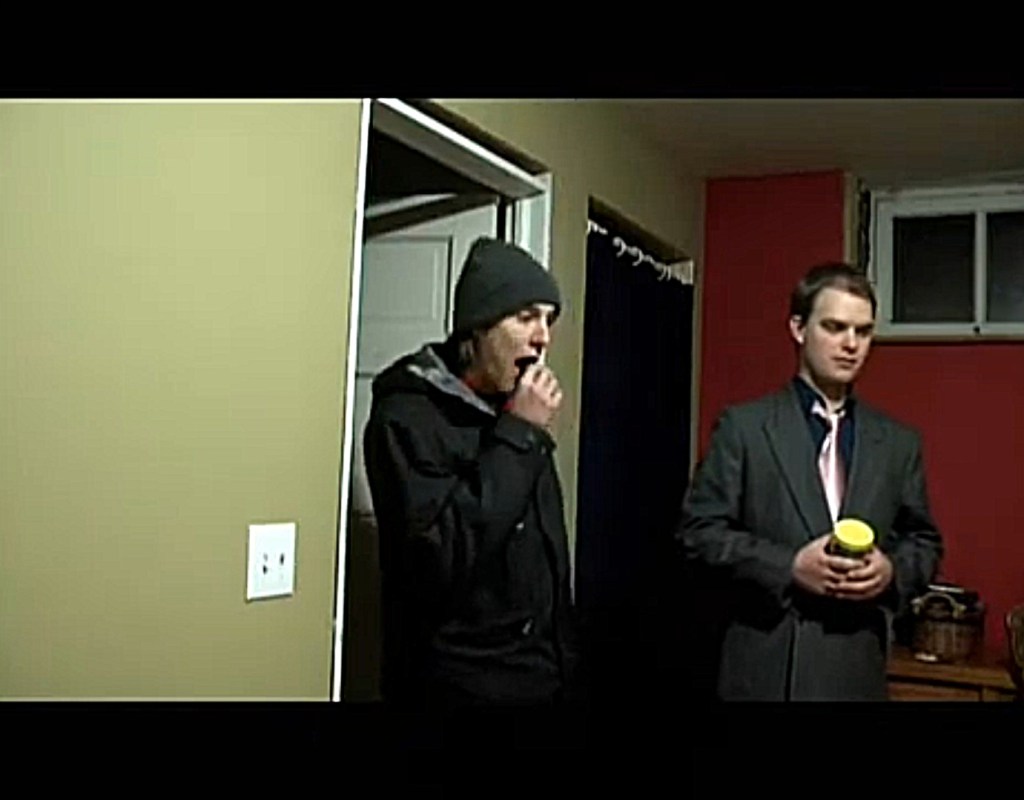
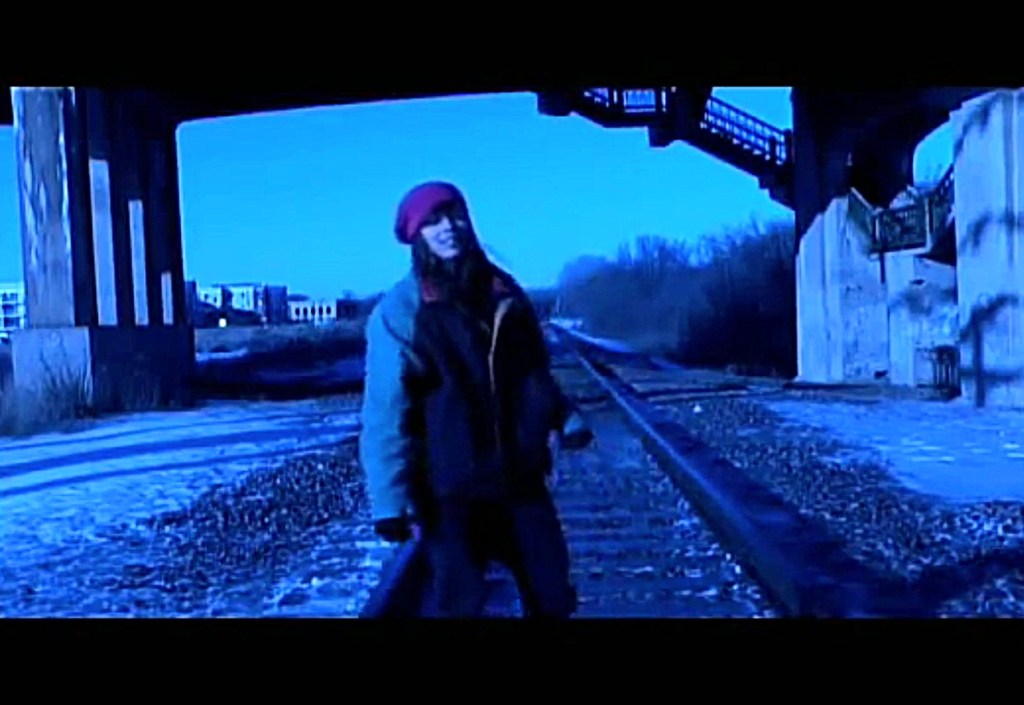
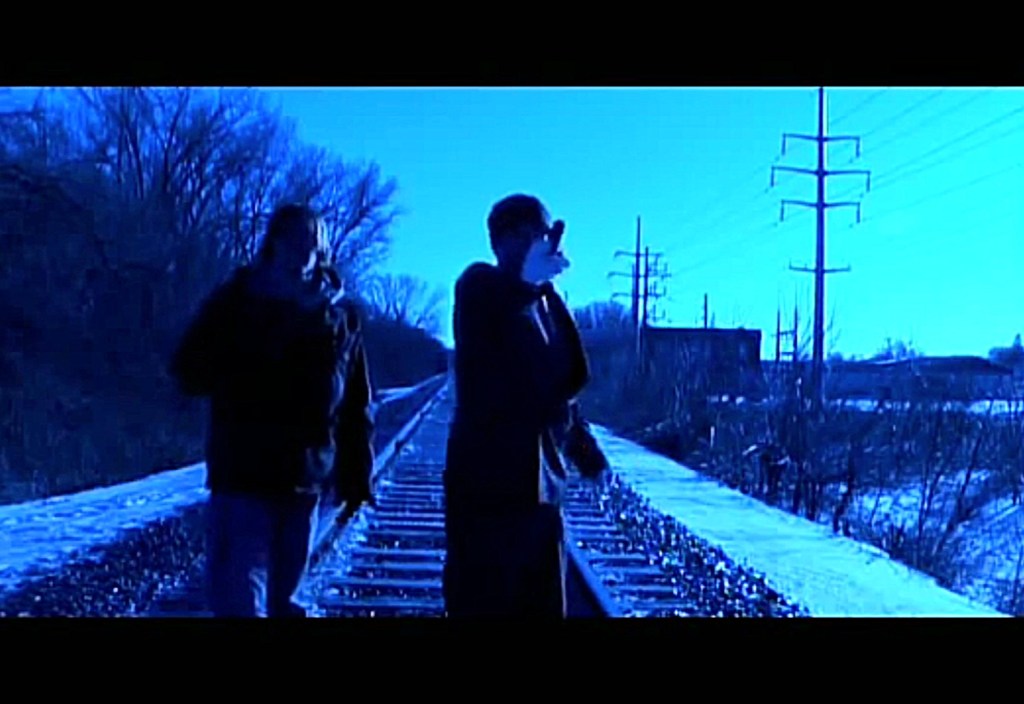
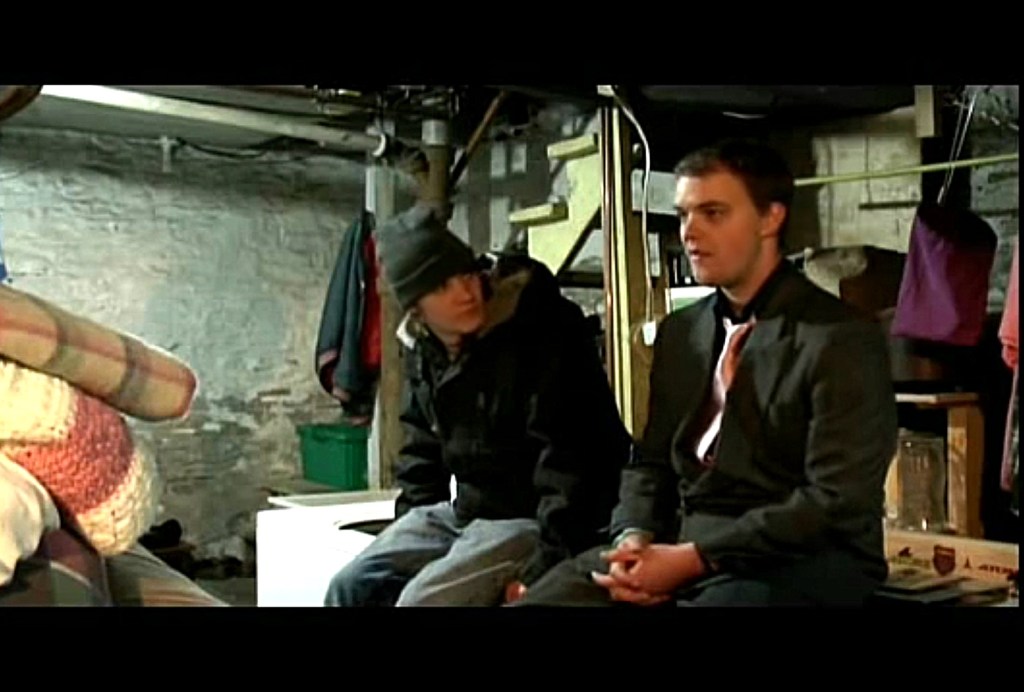
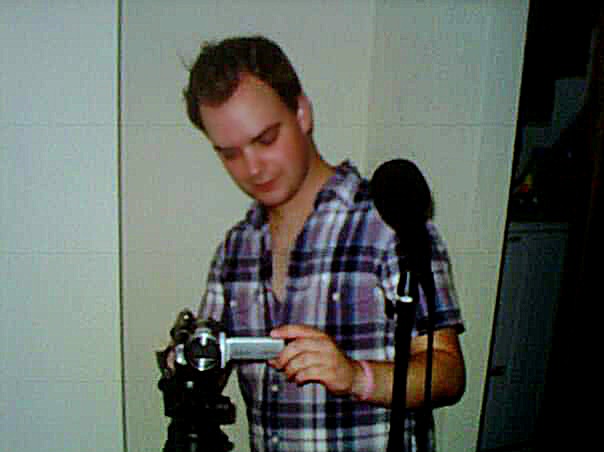
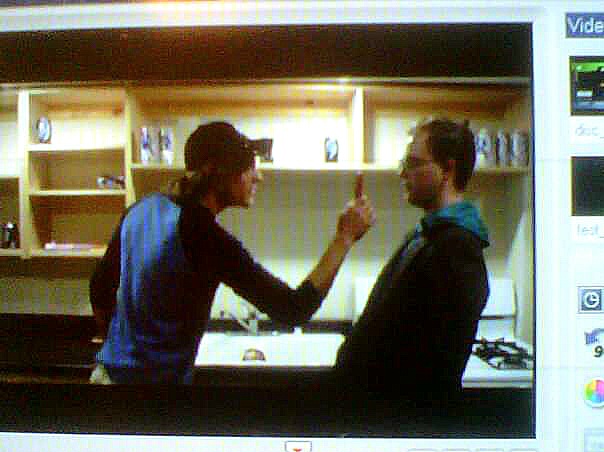
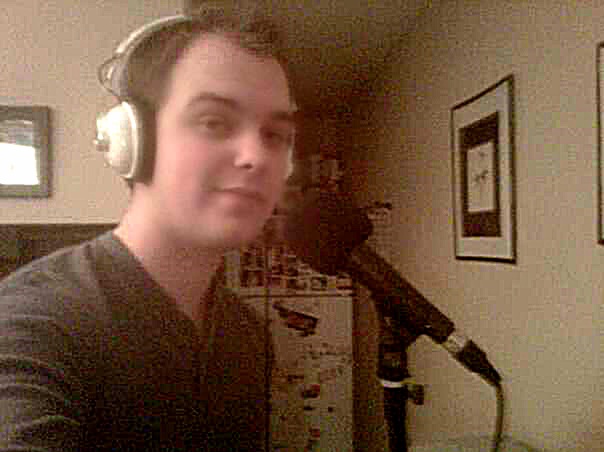
“But,” some of you may be thinking, “you released Jargon. It was streamed thousands of times over several media sites. I’ve watched it. The photos on this post are images from the production.”
You’re right: Jargon does exist. It came out in August of 2010.
I’m talking about Jargon: Season 2.
I actually had a plan for several more seasons of the show; I created a series bible, which contained the answers to questions we were just starting to formulate in the four episodes that made up Season 1. As a fan of serialized storytelling (especially shows like Lost and The X-Files), I wanted to make sure I had an idea of what was going on, even if the characters we played didn’t.
And what characters they were. I was Jasper, the alcoholic encyclopedia salesman whose investigation of his missing girlfriend was the catalyst for the story. He was accompanied by loyal stoner Sunny, played by the incomparable Kody Kile. Their path crossed with bizarre conspiracy theorist Ace, who reveals to them the mystery behind their mystery. (All the characters were named after childhood pets of mine.)
At the end of the season, they met a vampire, too.
The plan was for the trio to meet a parade of horror clichés: in Season 2, a werewolf and a version of Frankenstein’s monster were two of the new characters. All of these creatures were to be products of the H.I.G., and a flashback episode was to reveal their origin story: who they were, why they created the group, and what the initials H.I.G. stood for.
As I continued pouring time into the world of Jargon, I started to get pulled in another direction: I wanted to make a movie.
I soon canceled all future production on Jargon, and went right to work on a new idea I had: you guessed it, a musical motion picture called The Visitor!
Yeah, another Unproduced Work, which I covered last week.
Completing the first, difficult season of Jargon gave me the confidence to think bigger. Every time I extend my reach creatively, I don’t just learn new things; I find out what I’m actually good at and I build upon those skills, too.
People might think it’s weird that I dedicated a part of this month to the things I worked on that failed. I don’t disagree that it’s weird (everything I write is weird, grow up), but I also feel it’s important.
We have to share not only when we fail, but what we learned when we did.
I found out several times over that there are some things I simply can’t do alone.
I also found, in myself, that I am a capable storyteller in every single way that I have tried to tell a story.
So I learned what I could do alone, I found friends for what I could not, and I built on what I knew I was good at.
One of my first addictions was a cartridge called Tetris.
If you’ve never played the game — okay, you’re lying, but I’ll bite. In Tetris, tetrominoes (geometric shapes made of four connected squares) drop from the sky and it’s up to you to move, rotate, and place them on the way down. If you do it right, you create solid lines with the shapes, perfect rows that then disappear to add points to your score.
The game speeds up as you play it, becoming more unforgiving as you go, pretending it’s life or something.
You lose the game when your screen gets filled by shapes that don’t complete any rows; though when I started playing, the game would often be lost when I made my first mistake.
It can happen early, and there is an element of shame to it. You meant to place the tetromino one column to the left; you rotated a piece twice, returning it to its initial shape, making it unable to fit where you intended it to go.
The mistake leaves a gap.
And I have a hard time ignoring the gap.
I should focus on what I can do, the present piece, and what I can accomplish with it. There are other lines to clear.
But the gap.
And I make another mistake.
The gaps, the mistakes, the empty promises and false potential adds up; I make an unshakable realization that I can’t fix it, inevitably lose my focus, and I fail.
It’s not a coincidence I called Tetris an addiction.
A fun fact about Tetris is that you can never actually win it. You can only continue to put down one block at a time, to make the next right decision, until you can’t keep up, and you die.
Is that a fun fact?
I think it is. I’m reading Matthew Perry’s book and it is not very good but I am loving the hell out of it, because it’s like talking to a friend who gets me, like talking to myself sometimes.
Matty understands the gaps; the holes we are desperate to fill, and the mistakes we make that we can’t get over, letting our screens be overcome with shapes that make no sense and destroy our will to play.
I like the idea that we can die in games and then come back, because we do it in real life. We don’t die die, no, but people we used to be die, and we come back a little different each time. Sometimes a lot different. With new knowledge. With better skills.
I’ve died a lot. I’ve been given too many extra lives. I keep trying to put shapes in the right order, and I try not to mind the gaps.
I often have to repeat to myself that the world isn’t more tragic; we are just made more aware of all the tragedies.
And tragedy becomes a kind of string we wear around our finger.
I have extended family who are going through a personal tragedy right now, losing their father, my uncle, my mom’s brother, a good man, and my heart is terribly broken for them; last year, family on the other side dealt with something as tragic and unexpected; the year before that, that particular tragedy belonged to us.
You play with that string on your finger and wonder what it is you’re supposed to remember.
Every day on the internet, the tragedy picks somebody else. Another family member, friend, co-worker, acquaintance, somebody from high school, a famous person you’ve never met. We didn’t hear about every loss before. They all still happened.
Last October, on the day before Halloween, I was walking down our private steps to the garage on my way to work. The door to my downstairs neighbor’s apartment was open. There was a man inside the dark living room, but I averted my eyes, because it’s weird to look inside somebody’s home.
When I got to work, I had a Facebook message: it was from Mike. Mike was a bar regular of mine for years from Old Chicago; it turns out he was the man in the dark. He was my new neighbor.
I always liked Mike. Funny, smart, down-to-earth. He was always open with me about his demons; he talked to me about them, he had faced them and I found his honesty inspiring.
He sent me messages about our inept landlord and our incessant fire alarm. In November, Mike asked me how he could get my books. I told him I could just bring some copies downstairs, where he lived, just a dozen steps from where I am sitting.
In January, on the day my car was stolen, another friend sent me a text.
Mike was dead.
I am in as much shock today as I was when I found out. I don’t really know how to deal with it, and all the feelings I’m reminded of; my finger with the string wrapped around it is unbearably itchy.
There are so many rumors as to how he passed, and they are all firmly tied to demons. Understanding that nobody can be saved doesn’t save a person from immense guilt when they fail to even recognize somebody needed help.
The world isn’t more tragic. It doesn’t make the tragedy hurt less.
And the tragedy isn’t just a string; it’s a quilt. Every unique thread and event stitched together, to remind me of what it felt like to be there; to remind me of the lessons I had to learn.
The lessons from loss. The lessons from hopelessness. The lessons of being alive long enough to experience life’s consequences.
The big lesson is to love, whatever that means to you. Whether it means to hold close, to forgive, to hang in, to let go, to move on; to remember, to share, to keep; to talk, to listen; the version of love that feels true to you.
And all of mine goes out to you today, if you’re wrapping that string around that finger for the first or fiftieth time.
It’s something we go through together — even as we go through it alone.
So, at the beginning of March, we’re going to have some big news that is (hopefully!) exciting and will give you an idea of what the next year or so will look like, as far as what we’re working on and how you can be a part of it.
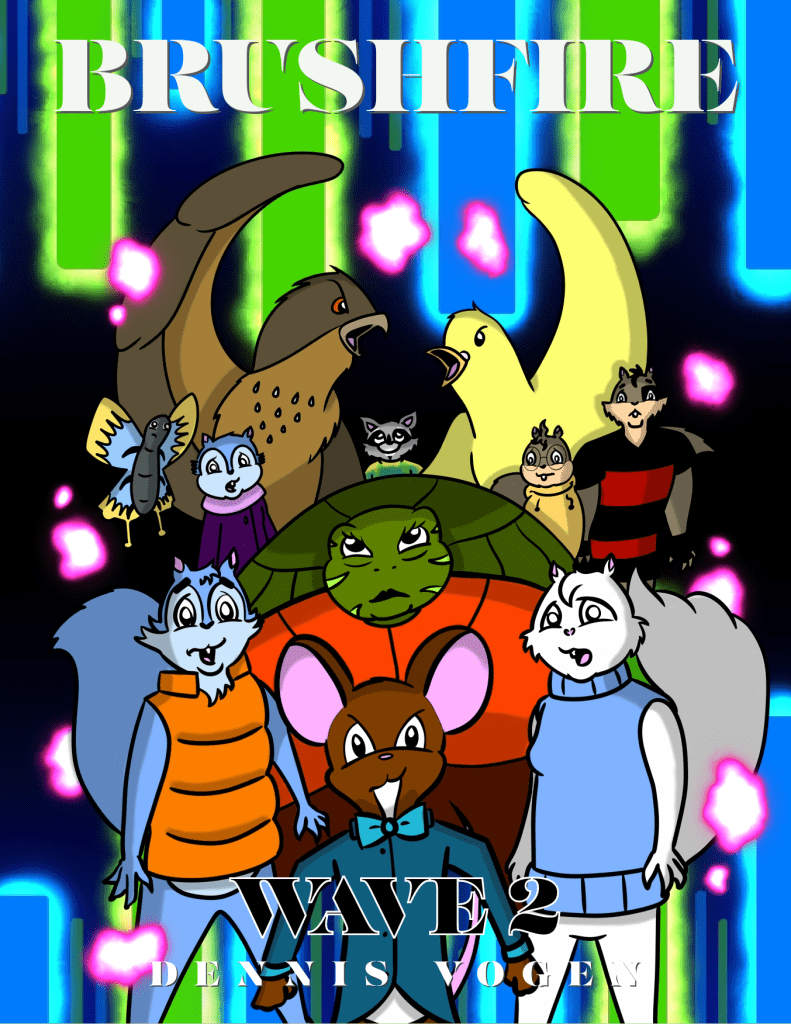
In the meantime: check out your first look at the Brushfire: Wave 2 cover!
New characters! High stakes! Why does everyone look so shocked?
You’ll have to pick up Brushfire: Wave 2 on July 4th, 2023 to find out. Details on how will be part of our announcement at the beginning of March.
Happy Valentine’s Day, squirrels! Tell the people you love that you love them, today and any day!
The other topic this month is Unproduced Work, and I’m going to start with the film that, to be completely honest, kind of broke my weird, little heart.
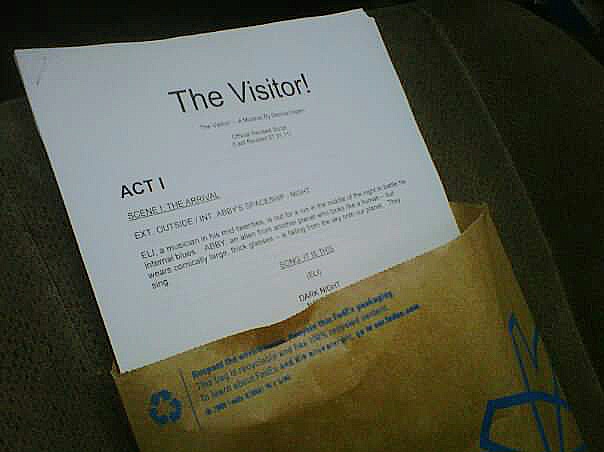
This is The Visitor!
By 2011, I had produced a lot of video. In high school, I often had my video camera rolling (literally, as those were the days we used tape, which actually rolled); sometimes for academic and theatrical projects, but mostly I shot our own creative work.
I went on to create music videos for my band, The Next Step, and was an early adopter of YouTube; I joined the site on April 7th, 2006, just over a year after it launched. At the time, I was still in that awkward analog-to-digital phase, as were most creators of that era.
It was not easy to create things with film or tape and then convert those things into digital media, for countless reasons, and some of you know this very specific pain.
As digital technology progressed and become both more affordable and accessible to creators, our worlds began to open up. We dreamed bigger.
And I started to think: I can make a movie.
In 2010, the idea for The Visitor! beamed into my brain: it was the story of a crash-landed alien, Abby, and the young man, Eli, who finds him and becomes his best friend, trying to help him understand this strange place he fell into. It found inspiration in films like E.T. and Starman — oh, and it was musical.
I wrote eight original songs for the movie. I played Abby; my dear friend Kody Kile agreed to help me out and became Eli. He and I worked together on my sci-fi web series Jargon (which will get its own entry later this month). There were several other characters in the script who never got officially cast, because we never got that far into filming.
Going through social media, I put together this timeline of events:
Late 2010/Early 2011: The Visitor! is announced. February 8th, 2011: “It Is This” lyric sheet shared. April 7th, 2011: First draft written. July 3rd, 2011: Revised script finished. July 17th, 2011: “Not That Easy” demo recorded. July 31st, 2011: Logo revealed. August 1st, 2011: Final script finished. August 3rd, 2011: First day of shooting. September 24th, 2011: Video blog, featuring “Not That Easy.” March 8th, 2012: First teaser trailer.
We had managed to film some of the scenes that required only Abby and Eli; because I understood our limitations, I wrote most of the movie with just those two characters. They were the heart of the story, and the script itself was a sweet and salty tale of how we become friends. It was a comedy, sure, but Abby dealt with loneliness and fear, universal uncertainty.
Despite knowing how limited we were, I still overestimated what I could accomplish. I was frustrated with my lack of control; there was a lot more I wished I could do, with every shot, and eventually I became so overwhelmed and disillusioned with the project that I canceled its production.
I’d say we probably ended up shooting about 25% of the script. The process taught me a lot. More than anything, though, it was just so much fun while it lasted. Kody and I were filming outdoors late at night, and during the day in locations like the sweltering, suffocating basement of my parents’ house. We laughed a ton. We had a blast. I ate cottage cheese off the floor of a shed. I just wish I could have taken that experience and turned it into a film.
Is The Visitor! dead? Maybe. Maybe not. I wouldn’t count it out. But realizing I could tell stories without constraints — no budget or crew nor any compromises– I started writing my first book.
It was also about aliens. And loneliness, and fear, and control.
That book was Them, and we’ll be talking all about it next month.
Because I love doing things that nobody asked me to do, I write on the internet. I started taking it seriously in 2017, or as serious as I can take myself and my own writing.
Through the years, it’s done a lot of things. It has pissed people off. It has inspired people. It has inspired people to get really pissed off.
My words have tried to be helpful, have been occasionally hurtful, and have tried to excavate pain; they’ve been used to express love and loss and grief, to explain addiction and madness and sadness; they have explored the grand themes of the universe, the cosmic truths and the complex grays, and the intimate molecules, the fragile stardust, that make up you and me.
I write a lot of shit, I guess.
And over time, those words opened up a line of communication between you and I. Thousands of reactions and comments and messages, all engaged with the post of the day; sometimes enraged, sometimes enchanted, but always engaged, in one way or several.
I’ve been publishing fiction for ten years, but a nonfiction question became common to me. It was a variation of:
“I don’t really read fiction, but I love the stuff you do on the internet. Could you make something with that?”
For a time, I didn’t think I could. But when I really thought about it: books collect essays all the time, and people regularly publish their diaries and journals.
I thought, “Maybe I could do something that is both.”
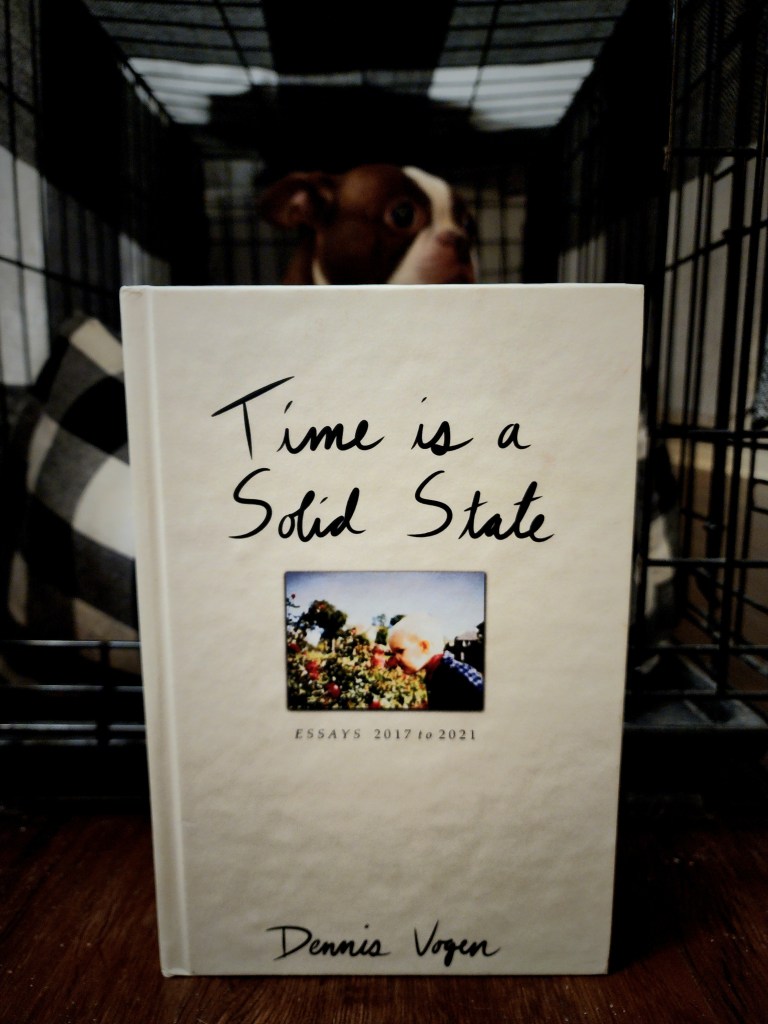
And that is how my first collection of essays, Time is a Solid State, was born.
I decided to do it chronologically, so you could travel through paper time with me; I contradict myself as I grow, and I don’t know if there’s a lot of philosophers out there who “show their work,” who allow you to see the flaws in their thinking, on the way to thinking something better.
And publishing this book, in May 2021, allowed me to answer the questions we began with.
What does it really matter? Talking about ourselves in real ways connects us in real ways.
What does it accomplish? Collecting our lives gives us a history of our lives, and we are our own historians. I turned the internet into a book!
Does anybody actually need it? I do. And if I need it, then maybe someone else does, too.
I always say that the internet would be a better place if we were all a little more vulnerable.
Leading by example has given people as many negative things to say about me as positive ones, and maybe even more.
But every time someone takes the moment to say, “This means something to me,” that means something to me that no mean words can ever erase or take away.
I’m going to take a break from my topics this month to address the announcement that they will no longer allow people to share their passwords.
The reactions are what you would expect: people claim it’s a bad move, and Netflix itself will be hurt after they implement the new guidelines.
But here’s what I see: most, if not all, of the people complaining, who think this is a terrible play, are the same people who are using somebody else’s Netflix account.
So, what exactly are they going to do? How will they boycott?
Will they just… continue to not pay for Netflix?
Oh, no.
I wanted to think of an analogy to help people understand this. I work in a restaurant, so framing things in that context comes naturally.
Imagine you are a server, and you are waiting on four people. At the end of their meal, they ask you to split the check evenly.
You run two credit cards. You look at the first slip, and there is a tip added relative to their half of the bill. You look at the second slip, and they have left you nothing.
“Wtf?” you ask.
“Well,” the second patron says, “my friend here already tipped you, so that’s good enough for the whole table.”
You fume. How dare they? Four people utilized your service, so you should be compensated accordingly. That is so obvious.
And you would go home and vent to your partner about these cheapskates and then log into your second cousin’s Netflix account that half of your extended family uses and not for one second realize the cognitive dissonance of your existence.
“Bro,” you say, “why are you sticking up for a billionaire company?”
I’m not. I’m standing up for the artists and craftspeople who are always the first to be stolen from.
I want to be clear: I believe people have rights. We need to eat, to have shelter, to feel safe. Exactly zero people on this planet have a “right” to watch the new season of Stranger Things.
People create these things. They work for it. And in a capitalistic society, they deserve to be compensated for it. And if Americans love anything, it’s capitalism; our idiotic obsession we’ve been brainwashed into over countless generations.
When it comes to what AMC is doing, by charging higher prices for better seats in their movie theaters, I side with Elijah Wood: it rewards people with more money, and punishes people who have less.
But that is the pinnacle of capitalism, living its best life, doing exactly what it was made to do.
Maybe our hyper-capitalism isn’t the flex we think it is.
Piracy is bad. Stealing is bad. No matter what kind of society we have, this seems obvious.
The fact that so many people can have strong feelings towards their own theft as a positive force just reinforces why we can’t have any nice things.
And when it comes to considering what we can steal, art is always the first thing we take; for some people, they genuinely, inexplicably feel like it’s a victimless crime.
And maybe it is, like when someone is paid for half their work, whatever that work might be. They still got paid, a little.
And who among us isn’t broke?
Who actually suffers when we’re all a victim of the society we hold up?
Netflix should do a show about that. Except, at this rate, there may be no subscribers left to watch it.
In my first post about Online Writing, I addressed why I do the things I do. (Tldr: I’m an idiot.)
Now I want to talk about when and how.
I was once a regular internet user, just like you. I would quote cringey song lyrics, use cringey language, say cringey things about my cringey feelings, leave cringey comments, post cringey photos. A lot of us millennials have aged horribly via the world wide web (which is what we millenials once called the social, viral cesspool it has now evolved into); I would actually pride myself in how particularly bad I presented myself, if I wasn’t buried under gigs of shame and regret.
Being young and drunk on the internet taught me lessons that literally no other generation of humans have ever had to learn.
My digital scars are aplenty.
There was something about the captions people leave under their photos that would feel empty to me; an unfulfilled potential for actual exploration, which is kind of how I felt about myself.
Fast forward to me in a hospital bed.
I knew I had to change, and not the slow, gradual, luxurious kind.
I wanted to be honest with the handful of people left who still cared about me.
And so I wrote a post about what I was dealing with, in the rawest possible terms, accompanied by this photo of me at the end of one journey, and beginning of a new one. I had a problem and, in a twist on the leap of faith, I wanted to solve it with you.
Do you know how many short, clever, trendy, sweet, hilarious photo captions I have read in my life?
Literally, a million.
Do you know how many I can remember?
Exactly none.
And I wanted to use that format — the space where we usually place a tiny, impersonal caption — to tell long-(or longer-)form, intimate stories.
And that’s how the essays were born.
They vary in topic and quality, sometimes wildly, like a horse learning how to run. They do a lot for me, and some of them are among my most meaningful writing.
So meaningful, in fact, that there came a time when I got so many questions about whether I could do anything else with those essays that I finally decided I could.
That resulted in a book, called Time is a Solid State — and we’ll talk all about that next time.
P.S. If you’re coming here to tell me I’m still cringe, you’re not wrong, and I have no evidence to the contrary. I can suck the poison from the most toxic parts of my being, but I can’t change the fact that I’m still a millenial.











 The Den